❌

Reading view

Are Your World Cup Tickets Legit? 40% of Fans May Risk Unofficial Sellers

Whether you’re planning a once-in-a-lifetime trip or just hoping to catch a match while it’s in your city, the 2026 FIFA World Cup is already driving a surge in ticket searches, travel bookings, and last-minute plans. 

But where there’s high demand and big money, scammers aren’t far behind. 

“The World Cup is one of those events where excitement and cost collide,” says Abhishek Karnik, Head of Threat Research at McAfee. “Tickets have been expensive, and for many people, especially families or fans traveling, the costs add up quickly between tickets, flights, hotels, and everything else that comes with attending.”

“When prices feel out of reach, people naturally start looking for better deals or cheaper options. That is where things can get tricky. If someone suddenly offers what feels like a great price compared to everything else out there, it can feel like a rare opportunity worth jumping on. Scammers understand that.” 

Let’s break down the new McAfee research, what scams to watch for, and how McAfee’s tools help you stay safe.

New McAfee Research Finds a Gap Between Awareness and Risk 

New research from McAfee shows that while most fans are aware of World Cup-related scams, many are still willing to take risks to secure tickets.  

In fact, 40% say they would consider buying from an unofficial source if they can’t get tickets through the official FIFA site, as many expect tickets to sell out and hope to find affordable resale options. 

That tension is what makes events like the World Cup especially vulnerable for scams. 

With limited ticket availability, rising prices, and the pressure to act quickly, even informed fans can find themselves making decisions they normally wouldn’t, like buying tickets from a reseller on TikTok.  

And scammers are counting on it. 

Survey takeaways: 

  • 76% of fans are interested in getting World Cup tickets 
  • 35% have already started searching online 
  • 43% are willing to spend over $500 on tickets 
  • 66% say they’re aware of World Cup-related scams 
  • 66% say they’re concerned about being scammed 
  • 40% would consider buying tickets from unofficial sources 

The Most Common World Cup Scams to Watch For 

“Usually, it is not just one thing that gives a scam away,” Karnik says. “It is when a few warning signs start adding up at once, pressure to act quickly, prices that feel unusually low, or details that seem slightly off.” 

“One of the biggest is urgency around pricing. If someone is pushing a deal that feels dramatically cheaper than similar tickets, claiming prices are about to go up, or creating pressure to buy immediately, that is worth paying attention to. Creating artificial urgency around a ‘great deal’ is one of the easiest ways scammers get people excited enough to move quickly.”

Below is a comprehensive breakdown of the most common scams tied to major global sporting events like the World Cup, including how they work and what to look for. 

McAfee’s Scam Detector,  Safe Browsing tools, VPN, and Password Manager work together to help you spot scams like these as they happen by flagging suspicious messages, blocking risky websites, and helping you make safer decisions before you click, pay, or share information. 

 ⚽ Scam Type    What It Is    How It Works    Red Flags 
Fake Ticket Resale Scam  Fraudulent tickets sold through unofficial sites or individuals  Scammers create fake listings or duplicate real tickets and sell them to multiple buyers  Prices far below or above market, refusal to use official transfer systems, pressure to act fast 
Social Media Ticket Scam  Tickets sold through platforms like Instagram, Facebook, TikTok, or X  Fake or hacked accounts post “last-minute” ticket offers and move conversations to DMs  Urgent language (“only 2 left”), new or suspicious profiles, requests to pay outside the platform 
Duplicate QR Code Scam  One legitimate ticket is resold multiple times  Multiple buyers receive the same QR code, but only the first scan works  Screenshots instead of official transfers, identical tickets sold repeatedly 
Fake Ticket Website Scam  Websites designed to look like official ticket platforms  Victims enter payment info or purchase tickets that don’t exist  Slightly misspelled URLs, unfamiliar domains, lack of official branding verification 
Travel & Accommodation Scam  Fake hotels, rentals, or travel packages  Listings appear legitimate but either don’t exist or are already booked  Prices that seem unusually low, requests for upfront payment, lack of verified reviews 
Booking Impersonation Scam  Fraudsters pose as airlines, hotels, or booking platforms  Victims receive messages about “issues” with bookings and are asked to click links or provide info  Unexpected messages, requests for login or payment details, links that don’t match official sites 
Public Wi-Fi & Phishing Scam  Data theft through unsecured networks while traveling  Scammers intercept data or create fake login portals on public Wi-Fi  Open networks with no password, login pages asking for unnecessary information 
Fake Giveaway Scam  Promotions claiming free tickets or VIP access  Victims are asked to enter personal data, click links, or pay “processing fees”  “You’ve won” messages you didn’t enter, requests for payment to claim prizes 
Betting & Prediction Scam  Fake betting tips or “guaranteed wins” tied to matches  Scammers sell fake predictions or direct users to malicious betting sites  Claims of guaranteed outcomes, requests for upfront payment, unfamiliar platforms 
Merchandise Scam  Counterfeit World Cup gear sold online  Buyers receive low-quality or no product at all  Unverified sellers, poor site quality, deals that seem too good to be true 

How AI is Making These Scams More Convincing

Unfortunately, with the continued improvement of AI, these scams are becoming more convincing. 

AI tools allow scammers to create: 

  • More realistic websites and messages 
  • Personalized outreach that feels legitimate 
  • Fake endorsements, images, or promotions 

That means traditional advice like “look for typos” is no longer enough on its own. 

Today’s scams often look polished, professional, and believable. 
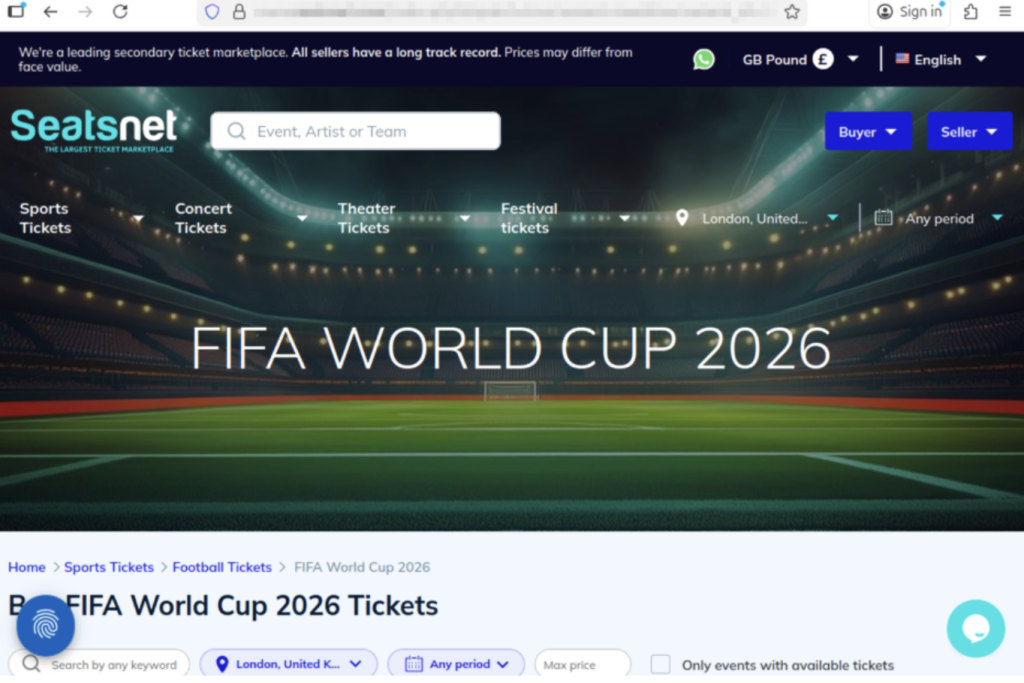
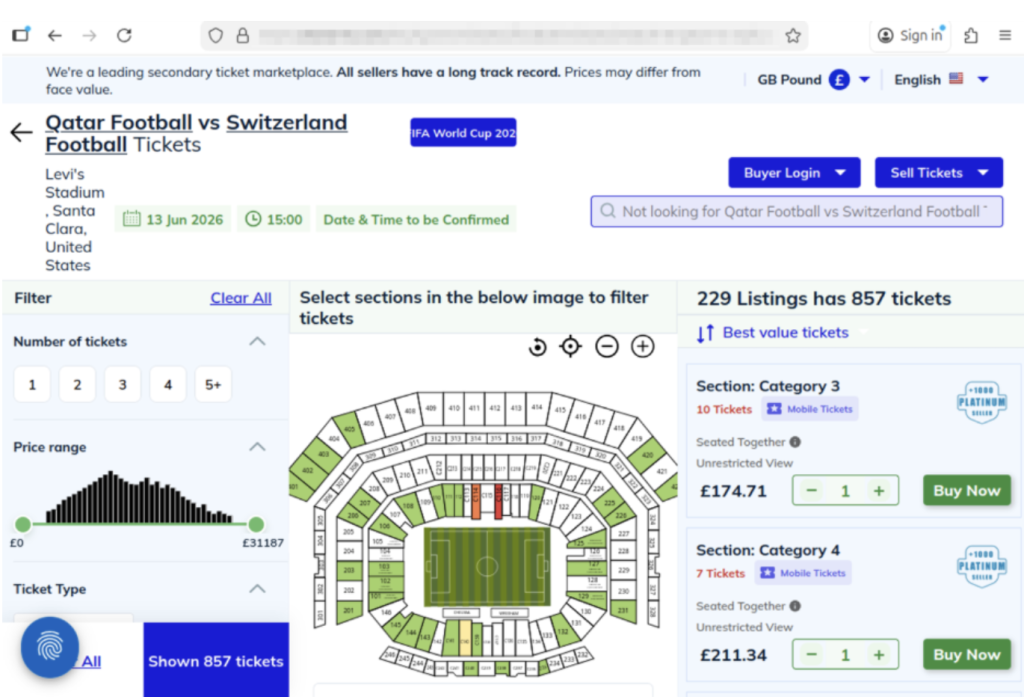
The website shows a scam operation detected by McAfee Labs. It has incredibly realistic seat-selection options and ticket-buying features. But it’s fake.
The website above shows a scam operation detected by McAfee Labs. It has incredibly realistic seat-selection options and ticket-buying features. But it’s fake.
Here you can see just how realistic the website looks. But these tickets are not actually for sale.

What “Official” Actually Means (and Why It Matters) 

For the World Cup, official ticket sales happen through designated FIFA sales phases and platforms. 

Buying outside those channels increases the risk of: 

  • Invalid or duplicate tickets 
  • Inflated pricing without guarantees 
  • No recourse if something goes wrong 

Even if a ticket looks legitimate, it may be: 

  • Sold to multiple buyers 
  • Already voided 
  • Rejected at the gate

When in doubt, go directly to the official FIFA website instead of clicking links from messages or ads. You can also visit their comprehensive FAQ section for all your ticket and event questions. 

How to Stay Safe When Buying Tickets or Traveling 

Here are practical steps fans can take to reduce risk: 

Safety Check  What To Do 
Buy from official sources  Use FIFA’s official ticket platform whenever possible 
Avoid clicking links in messages  Navigate directly to official websites instead. McAfee’s Safe Browing tools help prevent you from opening malicious links. 
Be cautious with resale offers  Verify platforms and avoid direct peer-to-peer payments 
Check QR codes before you scan them  You can check for QR code scams on-demand with Scam Detector 
Don’t pay with untraceable methods  Avoid wire transfers, gift cards, or crypto-only payments 
Double-check URLs  Look for misspellings or unusual domains 
Use secure connections  Avoid making purchases on public Wi-Fi, or use a VPN like McAfee’s. 
Protect your accounts  Use strong passwords and enable two-factor authentication. Consider a password manager like McAfee’s.  
Verify before you buy  If something feels off, pause and check before sending money 

What to Do If You Think You’ve Been Scammed 

If you think you may have purchased a fraudulent ticket, clicked a suspicious link, or shared information with a scammer, acting quickly can help limit the impact. 

Immediate steps to take 

Stop communication immediately
Do not send additional money or information, even if the sender claims you need to “complete” a transaction. It’s also a good idea to take screenshots of messages in case the scammer disappears. 

Contact your bank or payment provider
Report the transaction as soon as possible. Many institutions can help reverse charges or flag fraudulent activity if caught early. 

Secure your accounts
Change passwords for any accounts that may be affected, especially email, banking, and ticketing platforms. Our password manager and free password generator help create unique passwords every time.  

Enable two-factor authentication (2FA)
Adding an extra layer of security can help prevent unauthorized access, even if your password was exposed. 

Scan your device for threats
If you clicked a suspicious link or downloaded a file, run a security scan to check for malware or malicious software. Check out our free security scan. 

Monitor for unusual activity
Keep an eye on financial accounts, email logins, and any services tied to your personal information. Our free WebAdvisor helps protect you from malware and phishing attempts while you surf. 
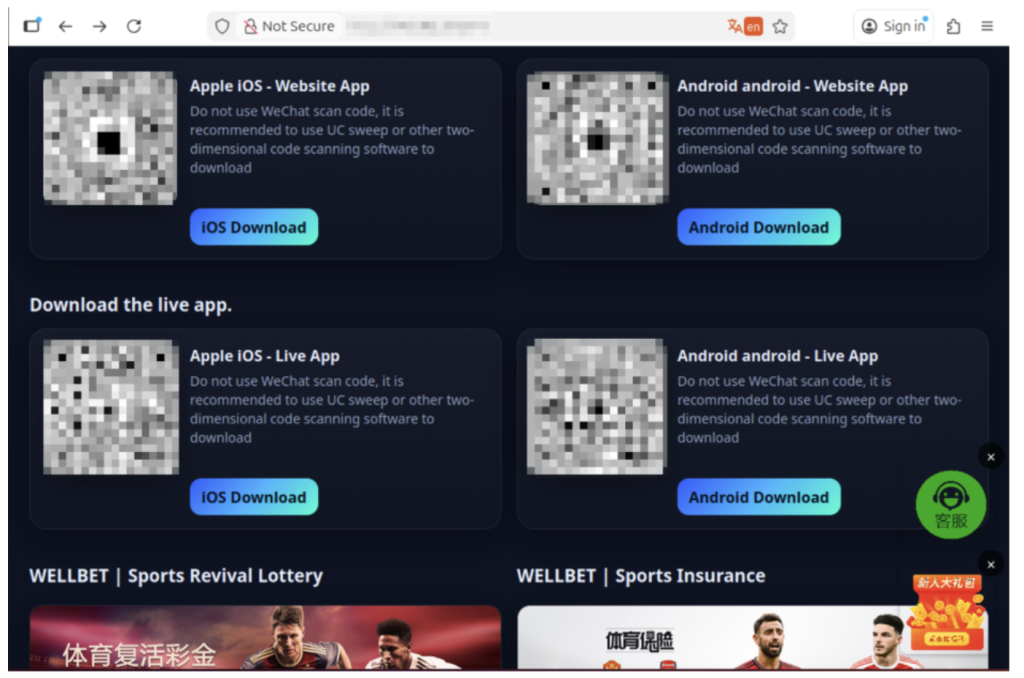
The image above shows malicious apps masquerading as sports betting sites or promising unique World Cup coverage. But when users download, their devices are infected.

How McAfee Helps You Spot Scams in the Moment 

McAfee offers more than traditional antivirus, combining multiple layers of digital protection in one app to help you stay safer while searching, clicking, and buying online. 

Scam Detector helps flag suspicious texts, emails, and videos automatically, so you can spot a scam before it hits you and your wallet 

Safe Browsing tools help block risky websites, alert you to phishing attempts, and guide you away from malicious links 

VPN helps keep your connection private on public Wi-Fi, protecting your personal and payment information 

Password Manager helps create and store strong, unique passwords to reduce the risk of account takeover 

Identity Monitoring and Alerts notify you if your personal information appears where it shouldn’t, so you can quickly take steps to fix it 

Personal info removal helps find and remove your personal info from data broker sites and close out old forgotten accounts 

Device and Account Security helps protect the devices and accounts you use every day 

Final Thoughts 

The World Cup isn’t just another event, it’s a moment when millions of people are making fast decisions involving real money, travel plans, and personal information. 

What McAfee’s research makes clear is that the biggest risk isn’t a lack of awareness. Most fans already know scams exist. The risk is what happens next. 

“When prices feel out of reach, people naturally start looking for better deals or cheaper options. That is where things can get tricky. If someone suddenly offers what feels like a great price compared to everything else out there, it can feel like a rare opportunity worth jumping on,” Karnik says. “Scammers understand that.”

“If somebody claims they have hard-to-get tickets at an unusually good price, especially for a popular match, people may feel pressure to act quickly before the opportunity disappears.” 

As demand continues to build toward the tournament, more fans will be searching, comparing, and purchasing online.  

The takeaway is simple: Staying safe isn’t just about knowing scams exist. It’s about slowing down, verifying before you buy, and using tools that help you make informed decisions in the moment. 

*McAfee is not affiliated with or endorsed by FIFA. 

The post Are Your World Cup Tickets Legit? 40% of Fans May Risk Unofficial Sellers appeared first on McAfee Blog.

  •  

1,000 Data Breaches Later, the Disclosure Lag is Worse Than Ever

1,000 Data Breaches Later, the Disclosure Lag is Worse Than Ever

Today, I loaded the 1,000th data breach into Have I Been Pwned. Reflecting on that milestone number, I pondered how to mark the occasion in writing, and what immediately came to mind was a very simple question: why is it still needed? Especially considering the emergence of privacy regulations such as GDPR and CCPA in the 12 and a half years since I started HIBP, what possible purpose does it still serve? The title kinda gives the answer away, and the big number we hit today coincided with another pattern that makes everything worse: increasingly long lag times for disclosure.

This is all going to be anecdotal, and as far as I know, there are no hard numbers for me to cite, but the evidence is everywhere. Here's what I mean:

New breach: Cruise operator Carnival was targeted in a ShinyHunters “pay or leak” attack last week. 8.7M records with 7.5M email addresses and loyalty program data were published yesterday. 85% were already in @haveibeenpwned. Read more: https://t.co/QhqNt0WucV

— Have I Been Pwned (@haveibeenpwned) April 24, 2026

That was the 24th of April, five days after news of the incident had broken. Given ShinyHunters' MO, Carnival would have known about the breach many days before they ratcheted up extortion pressure by announcing the impending leak on their website. The subsequent leak on the 24th was very public: an announcement was posted to the group's dark-web site, the data itself was published to their clear-web site, and industry commentary followed:

🚨 Massive Data Breach

Carnival Corporation (https://t.co/pGlchZ1yFy) reportedly impacted — 8.7M+ customer records exposed

📊 Alleged data includes:
• Full names & email addresses
• Dates of birth & gender
• Location data & loyalty program details

🎯 Linked to ShinyHunters… pic.twitter.com/Fd8tNFPqpd

— Intel and Breaches (@IBreaches) April 24, 2026

Per that last post, the data was then reposted to all sorts of other places: hacking forums, Telegram channels, and who knows how many other, more private locations. The point is that it spread quickly, extensively, and, without any shadow of a doubt, Carnival were aware of this. They then told people about it on the 27th... of May. According to their press release that same day, this was 43 days after learning about the incident. For more than 6 weeks, data breach victims whose names, dates of birth, email addresses, loyalty program details and, of course, their association with Carnival leaked to the public en masse had absolutely no idea of their exposure. And if they asked Carnival about it? Well:

As recently as four days ago, we heard “I’m in the breach per HIBP, but Carnival is telling me there’s no breach!” pic.twitter.com/YYmGm3NzEY

— Troy Hunt (@troyhunt) May 28, 2026

So, why the delay? Last week's press coverage may give some insight:

thorough and time-consuming analysis of the impacted data

Often, the reason I hear for disclosure lag is "we needed to fully assess the scope of exposed data before notifying people". The issue I have with this position is that it implies that even an early heads-up can't happen until there's a very comprehensive understanding of the impact. There are many things that take time to establish after a data breach: the jurisdiction each individual sits in, the precise data that was exposed about them and additional information that may be buried in terabytes of exfiltrated data in all sorts of different formats. But pulling out email addresses and sending early notification is very easy - I've literally done it a thousand times now.

This isn't just a Carnival issue; in fact, it was off the back of this next one only a few days later that I was prompted to write this post:

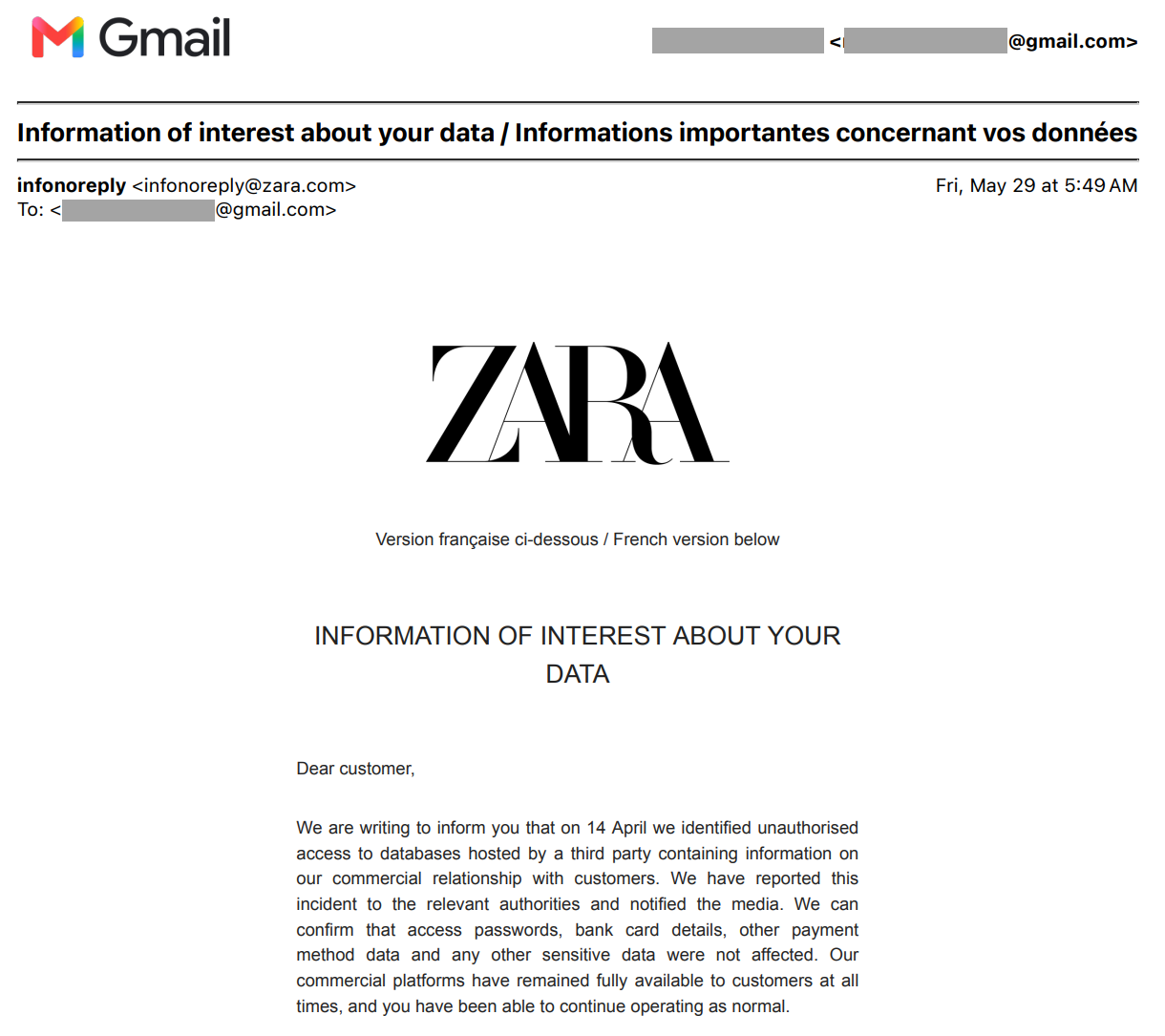
1,000 Data Breaches Later, the Disclosure Lag is Worse Than Ever

FFS. 45 days. Even worse than Carnival. And like Carnival, very broadly distributed and easily accessible by the masses, including HIBP:

New breach: Zara was named as a ShinyHunters victim last month, after which data containing 197k unique email addresses was published. Impacted data included customer support records, product SKUs and order IDs. 60% were already in @haveibeenpwned. More: https://t.co/0hIQbqoBCk

— Have I Been Pwned (@haveibeenpwned) May 8, 2026

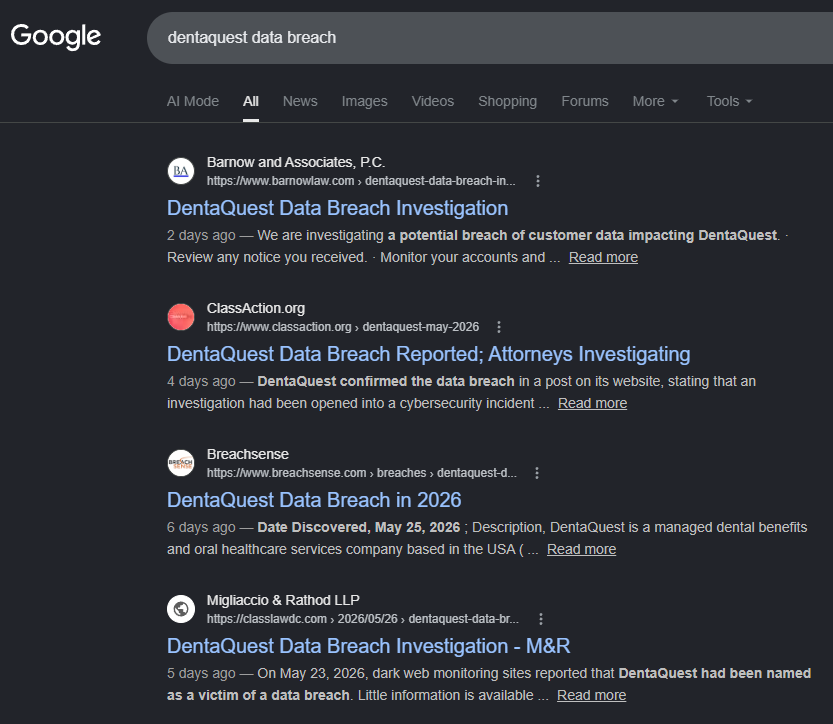
I have a working theory that the disclosure lag is worsening in part due to the proliferation of class actions immediately following a breach. In my live stream last weekend, I did a quick search for the DentaQuest breach:

1,000 Data Breaches Later, the Disclosure Lag is Worse Than Ever

Three of the first four results are all for class actions related to the breach, and there are two more class action results a little further down the page. I've been raising concerns about the adverse impact of class actions for many years now, and it's worse than I've ever seen. By a big margin, too.

It's not just me observing how the behaviour of these orgs appears to be influenced by how lawyers will respond, either. Have a read of this post from Roby Joyce (check out his bio if you don't already know why he's worth paying attention to) after he learned about his exposure in the ZenBusiness breach via HIBP:

What especially caught my eye was this sentence:

That is not a customer-protection posture. That is a litigation posture.

This isn't about prioritising the customer, it's about protecting the organisation. I don't think most people understand that organisational accountability really lies with their shareholders, first and foremost. All the pleasantries around "customers are our number one priority" and "we take security seriously" are all secondary to shareholder happiness, and minimising the chances of getting their arses sued into oblivion is a big part of that.

Rob's quoted comment above came immediately after the response he received from ZenBusiness after asking them about the incident:

If we determine that an incident resulted in the exposure of your protected PII, we will provide notice as legally required

Which brings me to the next problem as it relates to disclosure lag: it may be infinite. By which I mean you may never be told. Ever. GDPR allows it. CCPA allows it. Whatever your local privacy regulation acronym is also allows it. A couple of years ago, I wrote about the data breach disclosure conundrum, where I explained how privacy regs have very specific carve-outs around the circumstances under which data breach victims must be notified. For example:

If the breach is likely to result in a high risk of adversely affecting individuals’ rights and freedoms, you must also inform those individuals without undue delay.

That's in the UK, here's our carve-out in Australia:

Under the Notifiable Data Breaches scheme, an organisation or agency that must comply with Australian privacy law has to tell you if a data breach is likely to cause you serious harm

You see the loophole, right? As far as I know, ZenBusiness still hasn't contacted any individual victims. And like Carnival and Zara, their data is all over the place. Same with Charter, which was in the press last week, where they were quoted as saying the following:

No sensitive personal information (PI) or customer proprietary network information (CPNI) data was exfiltrated by the threat actor as a result of recent activity

I'm not aware of any disclosure they've made to individuals, but to use Rob's term, that sentence reads like legal posturing to me. It's technically correct, of course: there are very clear definitions for sensitive PII, for example, under California's CCPA:

a specific subset of personal information that includes certain government identifiers (such as social security numbers); an account log-in, financial account, debit card, or credit card number with any required security code, password, or credentials allowing access to an account; precise geolocation; contents of mail, email, and text messages; genetic data; biometric information processed to identify a consumer; information concerning a consumer’s health, sex life, or sexual orientation; or information about racial or ethnic origin, religious or philosophical beliefs, or union membership.

GDPR has a similar definition for "special categories of personal data":

personal data revealing racial or ethnic origin, political opinions, religious or philosophical beliefs, or trade union membership, and the processing of genetic data, biometric data for the purpose of uniquely identifying a natural person, data concerning health or data concerning a natural person’s sex life or sexual orientation

In other words, none of this applies to any of the ShinyHunters breaches in the examples I've been providing above.

I've been in many meetings with breached companies over the years where they're obviously aiming to skirt around disclosure obligations. Clearly, these obligations aren't legal ones, but I will argue they're social ones. We expect to be notified when our data is leaked, and we believe organisations should be required to inform us. Therein lies the gap.

I'll finish by recognising that every organisation I've referred to here, and indeed every one I've loaded into HIBP, has been the victim of a criminal act. I'm especially sympathetic to those who've been the target of an aggressive extortion campaign, and I know it's been an absolute nightmare for the folks in those companies who've been left to clean up the mess. However... here we are. Clearly, their goals are misaligned with ours regarding breach disclosure, and that's why, 1,000 breaches later, HIBP still exists.

  •  

CyberDanube Security Research 20260528-0 | Multiple Vulnerabilities in Multiple Vulnerabilities in Mennekes Amtron Series

Posted by Thomas Weber | CyberDanube via Fulldisclosure on May 31

CyberDanube Security Research 20260528-0
-------------------------------------------------------------------------------
title| Multiple Vulnerabilities
product| Mennekes Amtron Series and Smart-T PnC
vulnerable version| 5.22.3
fixed version| 5.33.11-21500
CVE number| CVE-2026-8979, CVE-2026-8980
impact| High
homepage| https://www.mennekes.at/
found|...
  •  

bmcweb (OpenBMC web server): four vulnerabilities — two unfixed, GHSA without a CVE

Posted by binreaper via Fulldisclosure on May 31

Hi all,

Posting a brief summary of a four-finding disclosure on bmcweb (the OpenBMC HTTP/Redfish web server), which ships in
BMC firmware on most modern enterprise servers — Intel, IBM, HPE, NVIDIA, and various ODMs.

Full timeline and analysis on the blog:

https://binreaper.pages.dev/posts/2026-05-27-bmcweb-disclosure/

## Why bmcweb matters

A Baseboard Management Controller boots before the host CPU, has full control over the server...
  •  

Weekly Update 506

Weekly Update 506

I'm finding it quite fascinating to watch the current spate of ShinyHunters breaches and dumps. There's the obvious criminality of it all, but then there's also the response from organisations (or lack thereof, as it relates to disclosure to victims), the appearance and disappearance of victims on their dark web site, the speculation around payments and so on and so forth. And it's seemingly endless - I mentioned DentaQuest during the video, and sure enough, the next day, a 233GB corpus allegedly from them was dropped. By the next update, it might be BCD Travel as well and who knows which other services will appear on the "pay or leak" list. Strange times, I can't remember it ever being this crazy before TBH.

Weekly Update 506
Weekly Update 506
Weekly Update 506
Weekly Update 506
  •  

Trevor Lawrence’s Viral “Haircut” is a Lesson in Deepfakes: This Week in Scams

Trevor Lawrence didn’t actually cut his hair. 

But millions of people thought he did. 

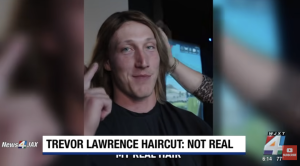
The Jacksonville Jaguars recently released a viral schedule announcement video that appeared to show their star quarterback chopping off his signature long blond hair. The clip spread quickly online, pulling in nearly 4 million views on X and triggering reactions from fans, friends, and even Lawrence’s grandmother. 

The catch? It wasn’t real. 

The team later confirmed the moment was partially staged, partially AI-generated and part of the joke. Even Lawrence admitted the fake looked convincing. 

And that’s exactly the problem. 

What started as a harmless sports prank is also a reminder of how realistic AI-generated videos have become and how easily scammers can use the same technology to fool people online. 

Why Deepfake Scams Are Growing Fast 

Deepfake scams use artificial intelligence to clone someone’s face, voice, or likeness to create fake videos, ads, phone calls, or social media posts that appear real. 

And increasingly, scammers are using celebrities, influencers, athletes, and trusted public figures to do it. 

According to McAfee research: 

  • 72% of Americans say they’ve seen fake celebrity or influencer endorsements online 
  • 39% say they’ve clicked on one 
  • 1 in 10 victims lost money or personal data 
  • Average losses reached $525 per person 

Why does it work? Because scammers know familiarity lowers our guard. 

When people see a recognizable face, whether it’s Trevor Lawrence, Taylor Swift, Tom Hanks, or a favorite influencer, they’re more likely to trust what they’re seeing before stopping to question it. 

From Funny Sports Videos to Real Financial Scams 

The Jaguars video was meant as entertainment. 

But scammers are already using the same technology for fraud. 

McAfee researchers recently identified a growing wave of celebrity deepfake scams involving fake giveaways, investment schemes, romance scams, and fraudulent ads. 

Some recent examples include: 

  • Fake videos of TV personalities promoting “miracle” products 
  • AI-generated celebrity investment ads pushing crypto scams 
  • Romance scammers using deepfake video calls to impersonate celebrities 
  • Fake emergency videos designed to create panic and urgency 

In one high-profile case, a woman reportedly lost nearly $900,000 to scammers impersonating Brad Pitt using AI-generated images and messages. 

The technology is getting good enough that “seeing is believing” no longer applies online. 

How to Spot a Deepfake Scam 

Here are some of the biggest red flags to watch for: 

Red Flag  What to Watch For 
Emotional urgency  “Act now,” “limited time,” or panic-driven messaging 
Too-good-to-be-true offers  Free giveaways, investment promises, miracle products 
Slightly unnatural video details  Off-sync lips, robotic speech, strange blinking, awkward lighting 
Fake verified-looking accounts  Usernames with extra characters or copied profile photos 
Requests for money or personal data  Especially through DMs, crypto links, gift cards, or wire transfers 

How McAfee Helps Protect You 

AI scams are evolving fast, but layered protection can help you stay ahead of them. 

McAfee’s Scam Detector, included in all core McAfee plans, can help identify suspicious links, messages, videos, and deepfake-related scams across texts, email, and social platforms before you click. 

Additional protections like Web Protection and Identity Monitoring can also help reduce your risk if scammers attempt to steal your credentials or personal information. 

Other Scam News This Week 

Charter Confirms Data Breach 

Charter Communications confirmed a data breach tied to a third-party vendor, exposing customer information. Whenever breaches like this happen, scammers often follow up with phishing emails and fake customer support calls pretending to help affected users. 

7-Eleven Data Breach Reports Surface 

Reports surrounding a potential 7-Eleven data breach are circulating online. Consumers should stay alert for fake password reset emails, loyalty account phishing attempts, and scam texts impersonating retailers. 

‘Tom Selleck’ Celebrity Scam Highlights Rise of AI Impersonation Fraud 

A tragic case tied to an alleged Tom Selleck impersonation scam is drawing attention to the growing threat of celebrity AI fraud. Experts warn that scammers are increasingly using fake celebrity profiles, AI-generated messages, cloned voices, and deepfake videos to build trust with victims online, especially older adults.  

The case underscores how emotionally manipulative and financially devastating these scams can become. 

Hackers Are Exploiting AI Chatbot “Personalities” 

Researchers told The Verge that attackers are beginning to manipulate chatbot behavior and personalities to trick users into unsafe actions, highlighting growing concerns around AI trust and social engineering. 

Fake Inheritance Email Scams Are Getting More Convincing 

A phishing scam making headlines this week uses fake inheritance notices and “unclaimed estate” emails to pressure victims into sharing personal information. 

Unlike older scam emails full of spelling mistakes, newer versions look polished and professional, often using legal-sounding language, fake reference numbers, and urgent 48-hour deadlines designed to trigger panic before people stop to verify the message. 

McAfee Safety Tips This Week 

The next deepfake won’t always look fake. That’s what makes these scams dangerous. 

Here are some practical, go-to tips  

  • Pause before clicking celebrity endorsements or viral videos 
  • Verify accounts through official sources before trusting promotions 
  • Never send money or personal data based on social media messages alone 
  • Be skeptical of urgency, especially “limited time” threats 
  • Use AI-powered scam protection tools to help identify suspicious content before you engage 

And we’ll be back next week with more.

The post Trevor Lawrence’s Viral “Haircut” is a Lesson in Deepfakes: This Week in Scams appeared first on McAfee Blog.
  •  
❌