 Login
Login
Designing for What’s Next: Securing AI-Scale Infrastructure Without Compromise
6100 Series is an ultra-high-end firewall, delivering exceptional performance, line-rate threat protection, and modular scalability at AI-ready data centers.

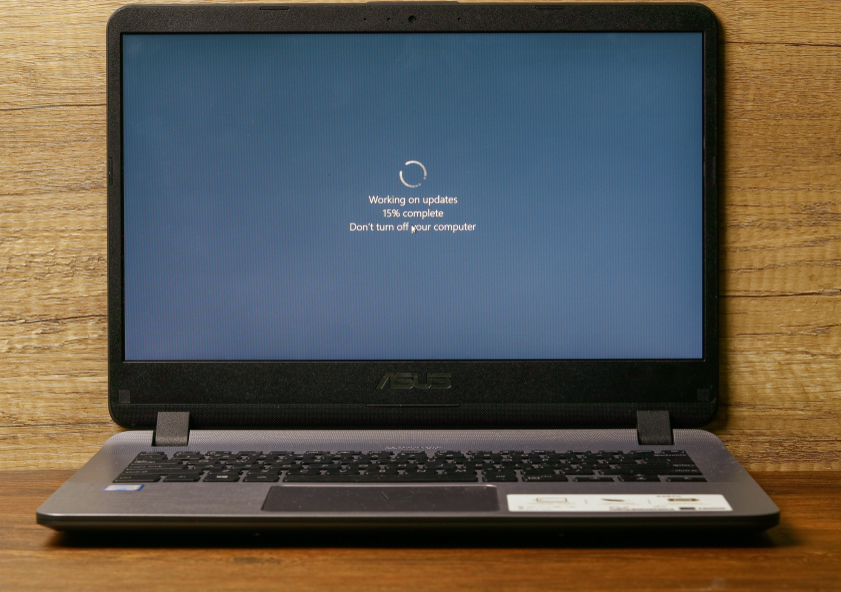
Microsoft today pushed software updates to fix a staggering 167 security vulnerabilities in its Windows operating systems and related software, including a SharePoint Server zero-day and a publicly disclosed weakness in Windows Defender dubbed “BlueHammer.” Separately, Google Chrome fixed its fourth zero-day of 2026, and an emergency update for Adobe Reader nixes an actively exploited flaw that can lead to remote code execution.
Redmond warns that attackers are already targeting CVE-2026-32201, a vulnerability in Microsoft SharePoint Server that allows attackers to spoof trusted content or interfaces over a network.
Mike Walters, president and co-founder of Action1, said CVE-2026-32201 can be used to deceive employees, partners, or customers by presenting falsified information within trusted SharePoint environments.
“This CVE can enable phishing attacks, unauthorized data manipulation, or social engineering campaigns that lead to further compromise,” Walters said. “The presence of active exploitation significantly increases organizational risk.”
Microsoft also addressed BlueHammer (CVE-2026-33825), a privilege escalation bug in Windows Defender. According to BleepingComputer, the researcher who discovered the flaw published exploit code for it after notifying Microsoft and growing exasperated with their response. Will Dormann, senior principal vulnerability analyst at Tharros, says he confirmed that the public BlueHammer exploit code no longer works after installing today’s patches.
Satnam Narang, senior staff research engineer at Tenable, said April marks the second-biggest Patch Tuesday ever for Microsoft. Narang also said there are indications that a zero-day flaw Adobe patched in an emergency update on April 11 — CVE-2026-34621 — has seen active exploitation since at least November 2025.
Adam Barnett, lead software engineer at Rapid7, called the patch total from Microsoft today “a new record in that category” because it includes nearly 60 browser vulnerabilities. Barnett said it might be tempting to imagine that this sudden spike was tied to the buzz around the announcement a week ago today of Project Glasswing — a much-hyped but still unreleased new AI capability from Anthropic that is reportedly quite good at finding bugs in a vast array of software.
But he notes that Microsoft Edge is based on the Chromium engine, and the Chromium maintainers acknowledge a wide range of researchers for the vulnerabilities which Microsoft republished last Friday.
“A safe conclusion is that this increase in volume is driven by ever-expanding AI capabilities,” Barnett said. “We should expect to see further increases in vulnerability reporting volume as the impact of AI models extend further, both in terms of capability and availability.”
Finally, no matter what browser you use to surf the web, it’s important to completely close out and restart the browser periodically. This is really easy to put off (especially if you have a bajillion tabs open at any time) but it’s the only way to ensure that any available updates get installed. For example, a Google Chrome update released earlier this month fixed 21 security holes, including the high-severity zero-day flaw CVE-2026-5281.
For a clickable, per-patch breakdown, check out the SANS Internet Storm Center Patch Tuesday roundup. Running into problems applying any of these updates? Leave a note about it in the comments below and there’s a decent chance someone here will pipe in with a solution.



Wearable health devices are designed to give you more control over your body and your data.
But in 2026, the bigger risk isn’t someone spying on your smartwatch or smartring in real time. It’s what happens if the data connected to that device gets exposed.
Health data, login credentials, and behavioral patterns tied to wearables can become valuable signals for cybercriminals. And once that data is out, it can fuel everything from identity theft to highly targeted scams.
Here’s what’s actually at risk, and how to protect yourself.
Wearable health data refers to the personal information collected and stored by devices like fitness trackers, smartwatches, and connected medical monitors.
This can include:
On its own, this data may seem harmless. But combined, it creates a highly detailed profile of your habits, routines, and health status.
Early conversations around wearable security focused on device hacking or surveillance.
Today, the bigger concern is data exposure.
If wearable platforms, apps, or connected services are breached, your data could be:
And because this data is personal and specific, scams built from it can feel far more convincing than generic spam.
When cybercriminals gain access to personal data, they don’t just sit on it. They use it.
Here’s how that plays out:
| Scenario | What It Looks Like | Why It Works |
| Health-related phishing | “Your insurance claim was denied” or “Update your health profile” | Feels relevant and urgent |
| Account takeover attempts | Password reset emails tied to known apps | Uses real account signals |
| Personalized scams | Messages referencing routines, devices, or conditions | Builds trust quickly |
| Fake alerts or services | “Device security issue detected” | Mimics real product behavior |
This is where the risk shifts from data privacy → real-world financial and identity impact.
1)Install updates immediately
Security patches fix known vulnerabilities. Delaying updates leaves gaps open.
2) Use layered protection, not just device settings
A VPN and security software help protect data in transit and block threats before they reach you.
3) Strengthen your login credentials
Use strong, unique passwords and enable two-factor authentication wherever possible.
4) Limit what you share
Review app permissions and only connect devices to services you trust.
5) Verify every message or alert
If you receive a message tied to your device or health data, double-check the source before clicking.
6) Monitor your accounts regularly
Small signs of unusual activity can be early indicators of larger issues.
Protecting your wearable doesn’t stop at the device itself. It extends to what happens if your data is exposed or targeted.
McAfee helps track your personal information across known breach sources and alerts you if your data appears where it shouldn’t.
This gives you early warning if wearable-related accounts or associated data are compromised.
If your data is exposed, scammers often follow.
McAfee’s Scam Detector helps identify suspicious messages, links, and communications before you engage, and explains why something was flagged, so you can make informed decisions quickly.
Together, these tools help protect not just your device, but the chain reaction that can follow a data breach.
The post Can Your Wearable Health Monitors Be Compromised? appeared first on McAfee Blog.
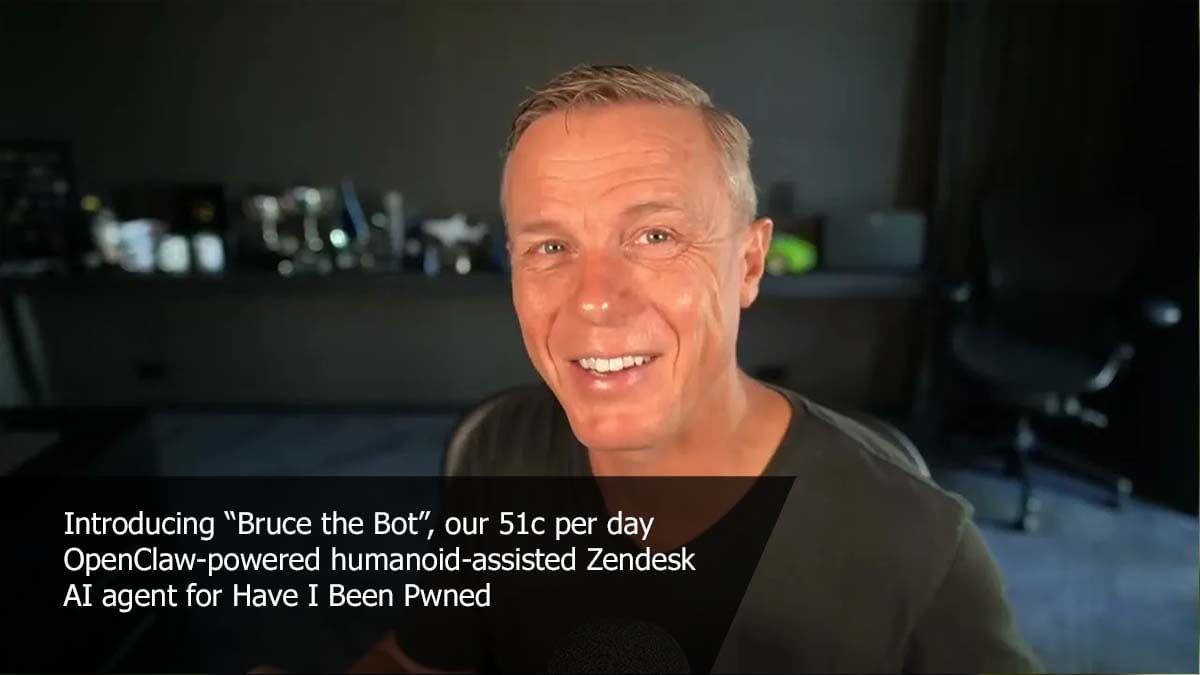
I'm starting to become pretty fond of Bruce. Actually, I've had a bit of an epiphany: an AI assistant like Bruce isn't just about auto-responding to tickets in an entirely autonomous manner; it's also pretty awesome at responding with just a little bit of human assistance. Charlotte and I both replied to some tickets today that were way too specific for Bruce to ever do on his own, but by feeding in just a little bit of additional info (such as the number of domains someone was presently monitoring), Bruce was able to construct a really good reply and "own" the ticket. So maybe that's the sweet spot: auto-reply to the really obvious stuff and then take just a little human input on everything else.






Emails claiming to be from Social Security are making the rounds right now.
They look official. They sound official. And they’re designed to get you to click before you think twice.
The Social Security Administration’s Office of Inspector General is warning about a spike in messages that claim your Social Security statement is ready to download. The goal is simple. Get you to click a link or open an attachment.
From there, things can go sideways fast.
Before interacting with anything like this, it’s worth pausing and running it through a tool like McAfee’s Scam Detector. This is exactly the kind of message it’s built to flag. Something that looks legitimate, but feels just slightly off.
The email mimics official government communication, using logos, formatting, and language that feels familiar. It might say your statement is ready, your account needs attention, or you need to review a document.
Once you click:
The biggest tell: Social Security does not send emails like this asking you to download statements or provide sensitive information.
And that, my friends, is scam number one in this week’s This Week in Scams.
Let’s get into what else is on our radar.
Healthcare data breaches don’t always make headlines the same way big tech breaches do, but they can be just as serious.
According to reporting from Fox News, CareCloud, a company that supports electronic health records for tens of thousands of providers, recently confirmed a security incident involving unauthorized access to one of its systems.
The access lasted several hours. And while it’s still unclear whether any data was taken, that uncertainty is exactly what makes situations like this risky.
Because even if you’ve never heard of the company, your doctor might use it.
Healthcare data is incredibly valuable. It can include:
Unlike a credit card, you can’t just cancel your medical history.
And when that kind of data is exposed or even potentially exposed, scammers often follow up with messages that feel highly specific and personal.
After incidents like this, scammers often move quickly:
These scams work because they’re timed perfectly and feel relevant.
This is another moment where Scam Detector can help flag suspicious links or messages before you engage, even when they reference real healthcare providers.
Scams today are layered.
A fake email leads to stolen credentials. A breach leads to targeted phishing. And those follow-ups are getting harder to spot.
McAfee+ Advanced gives you multiple layers working together so you are not left figuring it out after the damage is done:
Because the reality is, scams are designed to look legitimate. You shouldn’t have to figure it out on your own. We’re safer together.
We’ll be back next week with more scams making headlines.
The post Social Security Scam Emails and a Healthcare Data Breach: This Week in Scams appeared first on McAfee Blog.

.mp4)


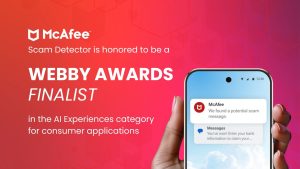
We’re excited to share that McAfee’s Scam Detector has been named a finalist in the 2026 Webby Awards.
Recognized in the AI Experiences & Applications – Consumer Application category and named a Webby Honoree for Best Use of AI & Machine Learning, Scam Detector is being acknowledged for its effectiveness as an AI-driven consumer tool.
This recognition of Scam Detector validates something key in research findings. According to McAfee’s 2026 State of the Scamiverse report, Americans now spend 114 hours a year trying to decide what’s real and what’s fake online.
Scam Detector was built with this era of uncertainty in mind, designed to help people cut through confusion and identify scams as they appear. The Webby recognition reinforces to us that McAfee’s Scam Detector is doing exactly that.
The Webby Awards are presented by the International Academy of Digital Arts & Sciences and recognize excellence across the internet, including apps, software, AI, and digital experiences.
Each year, thousands of entries are evaluated, with finalists representing the top work in their category globally.
In addition to judged awards, the Webby Awards include a People’s Voice Award, which is decided by public vote.
Scam Detector is designed to help people identify scams where they’re most likely to happen, always ready to help you spot what’s real and what’s not when you least expect it.
It uses AI to analyze and flag suspicious:
Beyond detection, Scam Detector explains why something was flagged as risky. That transparency helps show how decisions are made, so people can quickly understand the risk and feel more confident trusting what’s flagged.
As scams become more personalized and harder to detect, this combination of automatic detection and clear guidance is critical to preventing financial loss and identity theft.
Scam Detector is eligible for the Webby People’s Voice Award, which is decided by public vote.
If you would like to support McAfee’s Scam Detector, you can vote here: https://vote.webbyawards.com/PublicVoting#/2026/ai/ai-experiences-applications/consumer-application
Voting is open through Thursday, April 16 at 11:59 pm PDT.
Winners will be announced on April 21, 2026.
And a big thank you to the McAfee teams who brought Scam Detector to life and who continuously improve how Scam Detector identifies new threats and adapts to the evolving world of AI-driven scams.
The post McAfee’s Scam Detector Named Webby Awards Finalist for AI Innovation appeared first on McAfee Blog.


