America wants its allies to come together and help it lead the way in defining 6G communications standards, with security and resilience seen as key goals for next-generation networks. The latest effort to corral international work on 6G comes from the US National Telecommunications and Information Administration (NTIA), which says it is pursuing the objectives of a December 2025 memo from President Trump on "Winning the 6G Race." That memo didn't identify who America is racing against, but it is a fair bet that it is China, which gained a lead during the development of 5G technology. Huawei in particular is understood to hold more declared 5G standard-essential patent families than any other company. The NTIA says it is launching this initiative alongside more than 20 governments, including several European nations like the UK and the Nordic countries, Japan, South Korea, and Australia. The Nordics are significant as they are home to telecoms equipment suppliers Nokia and Ericsson. These governments have all pledged to strengthen cooperation on 6G over the next 12 months and beyond in support of greater security, interoperability, and resilience for next-generation networks, the NTIA claims. "The Call to Action for 6G Leadership and Security reflects an unprecedented level of international coordination on the future of communications technology," stated NTIA administrator Arielle Roth. "By working now with trusted partners, we will ensure that next generation networks reflect our shared security interests, strengthen our competitiveness, and drive innovation." So after President Trump has spent 18 months since inauguration disparaging and threatening America's "trusted partners," the US has decided it would really like their help in becoming the world leader in 6G technology. Isn't that nice? The initiative lays out specific milestones on strategic coordination over the next year or so, as 6G moves toward commercialization. These include engaging with the telecoms industry to understand the "political and economic landscape" for 6G networks and meetings to identify the potential for more coordinated approaches. It also calls for a big meeting in 2027 to review joint progress, where the partners are expected to evaluate funding strategies, share information on 6G research and development, assess 5G and 6G technical and cybersecurity risks, and promote common 6G policies. All of this seems aimed at coordinating positions on the spectrum needed for 6G ahead of the next World Radiocommunication Conference (WRC-27). Scheduled for October 18 to November 12 in Shanghai next year, the conference will consider which frequency bands are made available for next-generation mobile networks. But it isn't the first attempt at international collaboration over the next-gen wireless standard. The US-UK Tech Prosperity Deal, agreed last year, proposed greater cooperation in a range of science and technology areas including 6G, but this was put on ice by President Trump after just a few months over trade disagreements. Earlier this year, the Global Coalition on Telecommunications (GCOT) unveiled a set of security and resilience principles it wanted to see baked into 6G from the start. The organization includes many of the same nations as the latest US scheme. "This is a clear attempt by the US and its allies to shape the 6G landscape before commercial networks arrive," PP Foresight founder and analyst Paolo Pescatore told The Register. "The priority is to embed security, resilience, interoperability, and supply-chain diversity from the outset, rather than repeat the costly mistakes and geopolitical tensions that defined the 5G era. "Although China is not explicitly mentioned, the strategic intent is obvious: to reduce dependence on high-risk suppliers and to ensure that trusted nations have greater influence over standards, investment, and innovation. However, this remains a political framework rather than a binding agreement." The first 6G deployments could arrive as soon as 2029, with the US and South Korea likely to lead in early adoption, according to a report from Juniper Research earlier this year. Despite this, the exact characteristics that will define 6G networks have yet to be thrashed out. Bodies representing the mobile networks want to see a smooth and cost-effective migration path for their members, avoiding the mistakes made with 5G, while the GSMA has already put it out there that 6G networks may need up to three times the spectrum currently allocated to meet the anticipated demands for data. ®
Wireless jamming attacks are on the rise. Rice University researchers have shown how self-curving radio beams can make a jammer appear to be somewhere it isn't, potentially undermining some anti-jamming defenses. Jamming relies on flooding a wireless receiver with noise that denies service. Some modern receivers identify and block jamming attempts using direction-of-arrival (DoA) estimation technology that pinpoints the jammer's direction and directs an array null that blocks signals emanating in the jammer’s direction. Were a jammer to transmit a self-curving beam, however, it could fool DoA-based anti-jamming defenses by appearing to come from somewhere else entirely, and that's exactly what the Rice researchers demonstrated. Rice electrical and computer engineering professor Edward Knightly and doctoral student Caroline Spindel presented a paper [PDF] last month in which they demonstrated a curving-beam jamming attack that caused "catastrophic bit-error-rate degradation" while also "fool[ing] the receiver's DoA estimator," preventing conventional DoA-based defenses from stopping the interference. Knightly and Spindel have done prior research developing wireless technology that could bend beams around objects to increase signal strength - particularly useful for short-range millimeter wave signals - and found that the same technology could be used to deploy jammers that are far harder to locate. Spindel gave the perfect analogy in a recent Rice press release about the research for understanding how curved beams confuse DoA estimators by considering a soccer ball kick to the head. “Imagine being hit on the right side of your head by a soccer ball - you would naturally look to the right,” Spindel said. “If the ball actually curved through the air, like a David Beckham free kick, then it was kicked from somewhere else entirely.” Were Sir David to keep moving and kicking curveballs at your head you’d probably spot him eventually, but it might take a minute, and a few more smacks, to stop him. A signal jammer at radio-wave distances will probably be far harder to spot, and it won’t even have to move: Knightly and Spindel were able to create the illusion that the jammer was mobile by modulating the beam parameters from a stationary position, making it even more difficult to locate the jamming signal and negating the point of blindly searching for the best spot to point an array null. Conventional recovery methods used to block jamming completely failed in laboratory tests, Spindel said. “This is the first demonstration of a jammer that cannot be reliably localized and the first time self-curving wireless beams have been used as an attack,” Knightly added. The pair sees their research not just as a way to point out a serious threat to wireless signals - GPS jamming of aircraft is on the rise, for example - but also something that can inform the direction of future wireless technologies as we move toward the 6G era. Until then, however, there’s the potential for even more devastating jamming attacks to come. ®
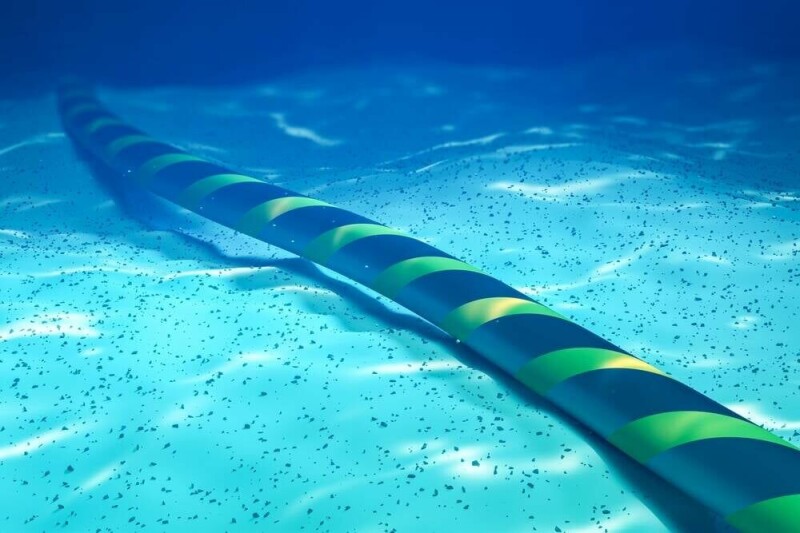
The British government wants stronger protection for subsea internet cables following a surge in Russian activity near UK waters, but its latest proposals lean heavily on fines and prison sentences rather than direct defensive action. Plans - outlined in a speech by Baroness Liz Lloyd, Minister for Digital Economy ahead of a consultation - include tougher penalties for recklessly damaging undersea cables, operator security obligations and emergency powers allowing government to compel businesses to better protect their infrastructure. In April, the Royal Navy and Royal Air Force tracked Russian submarines on a covert reconnaissance near critical undersea infrastructure. According to reports, Russia deployed an Akula-class attack submarine as a decoy while two specialist vessels from Directorate of Deep Sea Research - known as Glavnoye Upravlenie Glubokovodnikh Issledovanii (GUGI) - surveyed the UK's cable routes. “Their mission was to survey our cables in peacetime, so they could more easily sabotage them in a conflict,” Lloyd said in a speech delivered at the Royal United Services Institute (RUSI). “They wanted this operation to be secret, but they failed." In light of this, the government is reviewing whether the UK’s security and resilience arrangements are strong enough, the Defence, Science and Technology Laboratory said. UK Parliament's Joint Committee on National Security Strategy (JCNSS) last year told the government it is "too timid" in its approach to protecting Britain’s cable connections, and must do a better job. Measures proposed include tightening the law so ship owners and operators that recklessly damage subsea internet cables face tougher penalties. Cable operators could be landed with extra obligations to ensure they take steps to prevent, detect and respond to security incidents in a consistent and timely manner. “The UK already has strong protections in place for our subsea cables, but in a more uncertain world we cannot stand still,” said Lloyd. "As hostile activity by Russia and others grows, protecting these cables matters more than ever for our economy, security and daily lives.” Some 64 cables connect Britain to the global internet, and when one breaks, repair vessels are typically on scene within eight days. Historically, most cable faults have stemmed from fishing activity or dragging anchors, not sabotage. The Royal Navy unveiled its Atlantic Bastion program last year to supplement its sub-hunting ships with a force of uncrewed, autonomous vessels. The aim is that enemy submarines in the North Atlantic have nowhere to hide. This is in its early stages, with £14 million committed so far for testing and development. The latest proposals will be outlined a white paper published later this year. Separately, the UK, US, and Australia announced this weekend that their AUKUS partnership will jointly develop sensor and weapons payloads for uncrewed underwater vehicles, which is another building block for protecting seabed infrastructure. ®

 Login
Login